

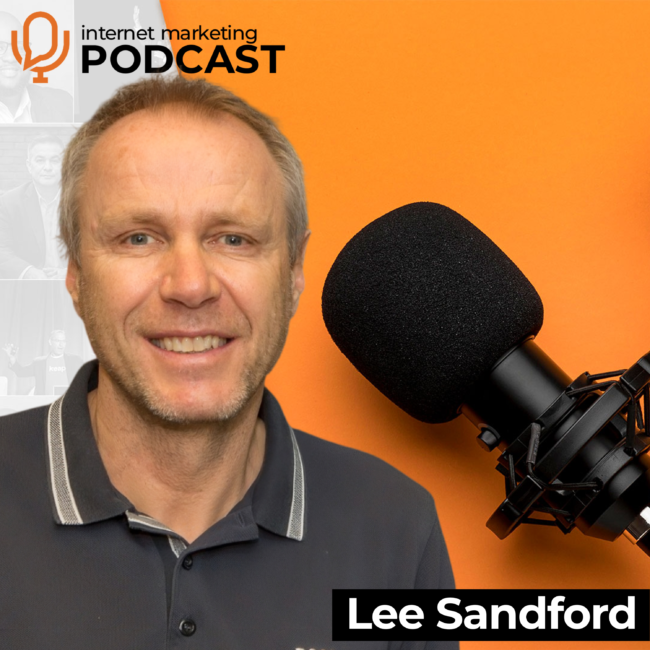
About this Podcast:
Today’s guest is Lee Sandford, a former professional footballer who successfully transitioned from sport into entrepreneurship. After his playing career, Lee built a business helping footballers and sports professionals become financially independent once the final whistle blows. He’s also the author of Goals to Gold and co-founder of an education business focused on trading and long-term financial skills.
Episode Transcript:
Editor:
Today's guest is Lee Sandford, a former professional footballer who successfully transitioned from sport into entrepreneurship. After his playing career, Lee built a business helping footballers and sports professionals become financially independent once the final whistle blows. He's also the author of Goals to Gold and co-founder of an education business focused on trading and long-term financial skills. Lee, it is so good to have you with us.Lee Sandford:
Absolutely great to be here. Delighted to be here and discussing whatever you're going to ask me.Editor:
Well, let's start maybe if we can with your football career, because a lot of people want to know what was it like as a professional football player?Lee Sandford:
Well, yeah, I mean, I started playing football and trying to be a professional football player at the age of year 11, and it was just my dream. I watched football on TV in Match of the Day, if people remember that. The older viewers, listeners will remember that. So I just wanted to be a football player and dreamt of it. And I went about doing it and it was really my dad that sort of got me into it and pushed me quite hard to actually go for it. But it was every childhood boy's dream and girl's dream now to become a professional footballer. And I lived that dream and it was just fantastic.Editor:
And how did that start? I mean, were you scouted or what was the process that you went through?Lee Sandford:
Yeah, so them days, I was playing for the school team and then the school team had Hampshire... It was in Basingstoke. Then we had Hampshire Trials for the county. So I went down to Southampton, we had trials for Hampshire County. We stayed there for a week and then I got playing for Hampshire. And at the time at Hampshire, I got spotted by Portsmouth Football Club. A scout actually went to those trials for the week and called me as soon as I got home on Friday, called my dad on the home phone and said, "Portsmouth are interested. Do you want to go down?" And I said, "Okay, I'll go." I'd also, prior to that, had some training sessions with Southampton Football Club, but it was Portsmouth. As I went down to Fratton Park down on the south coast, it was just great. It was like another family. So I went to Portsmouth Football Club and as a young lad at 13 years of age and signed school boy forms at the age of 14 and then spent every summer holiday, school holiday, I would be going down to Ports, spending time training with them for the week. And then onwards I signed apprentice forms, apprenticeship, which I suppose it's the academy these days they call it. And then I couldn't believe it. I literally signed and left home at 16 years of age. I remember my mom and dad taking me down to Portsmouth and all the apprentices that were starting at that time, we were on, I think it was 16 pounds a week and I just was getting paid to play football. I could not believe it. And it was just a dream come true. So then I moved home, moved house and stayed in [inaudible 00:03:11] in Portsmouth at 16. And at the age of 17, Portsmouth signed me as a professional and my wages, how about this, went from 16 pounds a week to 250 pounds a week and then 500 pounds a week. And it was just a dream. I just couldn't believe it. The background I come from was working class. My mom was working in a factory, my dad was a postman. So now I was earning as much money as them, which I gave them money and then helped them as well. And now I started to live the dream.Editor:
What a feeling that must be though as well. I mean, everyone talks about the idea of walking out onto the football match. You've got however many thousands of people, pairs of eyes looking at you. Were there nerves at that point or was it just excitement?Lee Sandford:
You didn't really know at that age because I made my debut at 17 in the first team and excitement, excitement, not nerves, just excitement because this is it now. In fact, the nerves came at the age of 19. I'll tell you that story in a second about the Liverpool Anfield. But at that time, you didn't really know nerves. And I would imagine... There was excitement playing in front of 20,000 people at first, you just get used to it. The noise, the crowd, you just get used to it and you just get used to the abuse. You get used to the cheers and you get used to the adrenaline buzz, the dopamine fix. It's just something you get used to. But then days there was no sports psychologist. So if you did struggle with the psychology side of stuff, there was nothing really there. It was old school really.Editor:
You must have seen the best side of this, but also maybe some of the not so nice sides of being in the spotlight as it were.Lee Sandford:
The big thing really for me and the learning for me, the aha moment that life is all mindfulnessology and behaviour came at the age of 19 when I really was playing... I played quite a few first team games, played for England youth team as well. I got an England cap for that, two caps for playing for England. And when I went to the Liverpool Football Club and Field, their ground and we were in the first division then, which is today's premiership. And I just loved Liverpool. I'm a Spurs fan unfortunately, but I just love Liverpool Football Club because I just watched it on TV so much. And I remember just coming out on the pitch before the game at Liverpool and this overwhelming fear came over me. This voice came over me. I'm not worthy to be here. So I cut a long story short, I proceeded to play that game and choked. And in sporting terms, choking is when it just doesn't happen, your body just freezes, your mind just works against you and you can't perform your skill. And so I choked at the age of 19. I was so disappointed. I got in the change rooms afterwards. I said to myself, I would never go and do that again. And from being a 17-year-old, literally with no fear to a 19-year-old now with a history of playing football games of two years and now choking at Liverpool, I went and got mental health, psychological help and a counsellor. There was no psychologist then, but I did get a counsellor. I saw a counsellor for a while that helped me with the preparation of games. If you make a mistake, this is how you deal with it mentally. And from then onwards, the psychology was such a huge interest for me in sport, professional sport, but also in the trading that I've been doing for over 20 years.Editor:
I was going to ask, I mean, at some point, so the career up until that point was going really well. I meanou are playing for some of the biggest teams. As you say, it's a boyhood dream to be able to do that. When those issues occurred, for want of a better phrase, was that when you started to think, what's next? What lies beyond this initial boyhood dream of becoming a professional footballer?Lee Sandford:
In 19, no, because you think it's going to last forever. You do think it's going to last. You're in this bubble where everything gets taken care of. You go on away trips abroad, the club takes your passport, they gather you and take you and pick you up. You don't pay for anything. You don't pay for dentistry. You don't pay for physio. You're in this bubble. So you just think it's never going to end. And anyone who's 19, 20, they don't think of getting older. They just think of living the life. And in that era then, it was all about socialising as well. You're a team, you go out drinking, you go out partying together. It was a different era than it is now. So you're never really thinking about past life until you get to the age of 24, 25, and then it all changed again for me. I went a different angle then with my life. So I would say not that age, but in the mid-20s, then I started to think about what am I going to do for the rest of my life? Came out of school with a couple of O level and nothing really, history and art, maths and English, but nothing really to think I could be academic after I leave football when I retire.Editor:
Well, I mean, that transition that you've been through from professional footballer into the business world has been nothing but stratospheric. I mean, you were successful as a footballer, but now even perhaps more so I would say as a business coach, was that something that was a plan? Did you sit down and plan this out or is it something that happened... Was it just a journey that you went on?Lee Sandford:
Yeah, a good one. I think I met an older lady at the age of 25 and we started dating for a couple of years. She was a business woman and she was into learning. So I decided to get myself a degree at Manchester Met and took on a sports science degree and a coaching degree. And then the coaching was something I really did like doing. And I started doing my coaching badges as a professional football player. So when I retired from football, I had all the qualifications. I had a degree, I had all the coaching badges. And when I left Met, the lecturer said to me, "Lee, if you're really interested in psychology, do a master's in sports psychology. You'll be the only football player in the world that's played over 600 games," well, it was less than that at that time, "and have a master's in sports psychology. You would get into any football club and help in that department." And I'd have four years of literally doing this degree. I'd had enough completely of learning and just doing the coursework and all that. I'd had enough. So I said, "No, I don't fancy doing that." And I should have done it. That was that sliding doors moment where I went right and went and I should have gone left and done that because it's massive now in sports, sports psychology, and I would've been one of the first. But then I retired and it was that I retired at 34 with a major neck injury. I busted my neck in a game and I dislocated my disc in my neck and I had to have a major operation on that so I could have a normal life. And then I just had enough of it. And I did a different turn. I met somebody who was trading 4X in currency, but he was old school. He was buying on the phone and selling currency of different countries and he'd done really well. I was really interested in that. And so I went to the US and learned from some mentors over there. I just gathered information and educated myself around what we call trading. And there was no trading [inaudible 00:11:12] about were doing... I didn't really know that many people that traded the markets and sat in front of a screen, but I was intrigued. So I learned from the guys in the US, came back. I didn't do very well for 18 months. And so at the age of 34, I'm scratching my head thinking, "Okay, this trading lark, I'm not very good at it. What else am I going to do?" And then I made the decision. I made the decision to get really good at this and to learn how to do it properly because it's a skill, it's a profession. And yeah, that's it. And then now 22 years later, I'm still here. I started teaching people a long time ago and coaching one-to-ones with people, and it just got so big. I got so overwhelmed with that. I had to formularize the company and I made it into a company, Trading College as we are today. And then the company grew to over a million revenue and it was like, "Oh God, this is getting... I don't want to do this." So I literally just cut back and said, right, we're not going to scale the business. We're not going to go to 20 million and things like that because I don't want all the stress that comes with that type of business and that scale. So I just coach people one-to-one now. I trade the markets. I've done my trading this morning and I'm done for the day. And during the week, I'll coach people one-to-one. Yeah, it's great.Editor:
It sounds to me like you really kind of get a buzz from this as well. If you put it on a par with what it felt like when you first stepped out onto a soccer pitch, how does it compare?Lee Sandford:
Well, you're sitting on your backside instead of running around. So I'm sat at my computer, or my standup, I'll stand up every now and then with a computer. But yeah, there's a dopamine fix. You mentioned my first book. My second book, that's all about psychology and about the human behaviour around trading. That is my passion. That really is the passion, the psychology around trading. But you get this dopamine fix in the morning where I trade what we call the morning move. The London session is from 7:00 AM to around 9:10 AM. And I trade the morning move where everyone wants to trade the morning move and you made your day's profit by 10:00 AM. So you go in, you look at your charts, you look at your strategy, and then you go, you make your day's money, and then I'm done. For me, it's freedom. I can watch my kids grow up. We're doing this midday, this interview, and I can do whatever I want now. And that's what I got into this for. That's why I learned how to do this new skill. And this is why I love it because there's one word and it's freedom and it's what I chase all the time. And then I go and play golf, I go on my bike, and that's how to live a life. My dad, my mom worked all the hours under the sun, up at six, start at seven, finish at nine, horrible sort of... And so I didn't ever want to be like that and so I put the extra effort in to learn how to trade. Like any skill, it's easy now that you learn that skill and put the time in. And anyone can do it. Any new skill, you just need to learn how to do it properly, put time, effort in, do some homework and just rinse repeat. But it's lovely. The lovely freedom I get from trading in the morning, I'm a morning person. I go in, I do my trading, and then I've got time to do whatever I want. It's lovely.Editor:
I think what's fascinating about your story, Lee, is that most people kind of assume that footballers, once they've reached a certain level, they're set for life. Whereas you totally pivoted, you've kind of gone, "Okay, I enjoyed that aspect to a degree, but now this is something that I'm truly, truly passionate about." And I can see from just chatting with you now that the skills actually are learnable. Anybody could do this.Lee Sandford:
Yeah, absolutely. If another human's done it and been successful, you can pass those skills onto somebody else no matter what background they are from, no matter what education they've had. And I think we're going through an era now where people are saying, especially when coming out of COVID, people want to do things for themselves. And I was offered football management jobs and I knew that in my life, I had young kids. I'm a late dad, I've got young kids, they're going to university and one's still in secondary school and I wanted to watch them grow up. So I wanted to learn this skill. And so I put the time and effort in to learn the skill. And anyone can do it. Anyone can do it. And a lot of people don't put the time and effort in and that's okay. They're going to get the results, whatever they get. If you put some effort in here and get coached and mentored properly, then that's great. Now the industry trading is and has got a bad reputation. It didn't do years ago, but what you've got, you've got the influence of social media and people chasing money. And so they sign up for these courses, they sign up for these young people online. They've only started trading two minutes ago and they're chasing signals and it's just not the way because the thing that gives me the most pleasure, freedom, but the power of making money whenever I want to make money, not every trade wins, by the way. So I've got that skill that I can sit on my screens and I know I could bring in some income today and not have to commute to work, that's powerful. But the industry has got a really bad name now and that's wrong. But we try to, here at Trading College, we try to very much show evidence and we've got a great community of men and women, all ages, and we come together daily, in person and online. So yeah, it's great. I'm still teaching. Like this morning I was coaching the live trading room, taking live trades and everyone was joining in. It was brilliant. It's great.Editor:
Do you think that trading has a bad reputation because of people who don't truly understand it, so therefore it's quite scary and therefore it's quite easy to dismiss it. It's almost like gambling in a way.Lee Sandford:
Yeah.Editor:
So do you think that's partly the reason? And also maybe you could dispel some of the myths that people have or some of the preconceptions that people have about trading.Lee Sandford:
Yeah, absolutely. So some of the myths, I mean straight away, trading is risky. You could lose all the money you invest into the trading accounts. So we got to start there, okay? And the brokers [inaudible 00:18:01] website, "70% or 80% of clients with this broker lose money." So we know there's a big 70% of people lose money with brokers. And I've coached thousands, I would say, probably hundreds one-to-one, but in groups I've coached so many different people. And the book is called Stop Trading Against Yourself. It's never the strategy with the strap line. And what that means is that as a chartist, we look at charts and make decisions on a chart, and trading is a game of managing risk because you will lose trades and it's how you lose those trades. You want to risk things like 1%, 2% when you get good of your account. It's a game of probabilities. It's a game of repeating patterns on a chart. It's a game of group fear. It's a game of psychology. And so I have a trading strategy, we do here at Trading. We have several, but let's say we have this one trading strategy that happens from anytime from 7:00 AM to 80 AM every morning. It sets up on a chart and it gives you a certain buy or sell signal. When that pattern sets up, my duty as a trader is to place the trade. So then I place the trade with the broker. I put all the stop loss in, so if it goes wrong, then I'm out the trade. Now this trade strategy has about a 79% chance of making money. So it's a probability game. So I've got to pull the trigger every time it sets up. That's why it can be easy because I'm following a process and that's what it is. I'm a process orientated trader. When this setup sets up, I place the trade. Now what happens with other people when they struggle and it goes wrong is that they are [inaudible 00:19:54]. Everything's random, it's just guesswork or feeling and that doesn't last. That's gambling. Years ago when I was a foot player, I used to go to Royal Ascot every year to the horses. And I'm not a gambler. I don't particularly like horse racing. I didn't watch any of the races hardly, but what I'd do, I'd go, I'd take 100 pounds and I knew I'd blow that 100 pounds. I'd put 10 pound on a horse that's got a nice name and that's gambling. And with trading, there's the gambling side where people do that, they just punt and they have feelings. And there's the professional side, the process strategy, algorithm side stuff that we follow all the time. And if you've got a trade strategy that's got a 75%, 79% success rate, then you've just got to pull the trigger when it sets up. Then you put your risk management onto it. I mean, we've got people that have just had children, they're stay at home moms that are doing this. And once they learn that concept that it's a game of probabilities, they just need to pull the trigger, A, it becomes profitable and B, it becomes less stressful and then it becomes process orientated. So every day I get to my screens, I do the same thing. Well, basically before that I have water, I drink coffee then to get going. I get some sunlight, daylight. I open screens. I'm process orientated. And I was so much like that when I was a football player. I'd get to the change rooms, my apprentice will put my boots out and put my kit out, get me ready. And if I had anything out of place, it would shake me a little bit. And so on Monday of this week, I had my first losing day for quite a long time. What that means is I lost money on that day. Let's say I was down 500 pounds on the day. I look back at my trades that day in my day, the morning, because I'm trading from 7:00 AM to 10:00-ish. I was completely out of sync. I had an interview and spoke to somebody early about eight o'clock. I had something else going on. I was completely out of sync. And so I put that down to my losing day, but I've got myself back on board the next day and then the next day, the next day. And by the end of the week now, I'm up profitable by the end of the week. Trading is process orientated. And if you're good at following a process, then you could be good at trading. Now you've got to remember in this day and age as well, people have got ADHD, people have got attention def. So sitting at a chart for an hour can spook some people that may have symptoms of ADHD because of they get bored and they just randomly trade. So we need to identify that right at the start of their learning. And that's why we run these tests and reports on people when they join our programme. So we do know, and they know more importantly, that they do have this area where they need to keep an eye on. And that's where the book Stop Trading Against Yourself really does dive into because it goes into other areas than just trading psychology. It talks about ADHD and dopamine fixes and things like that in the morning and what people are chasing and trying to chase. And so trading, people that don't do this, trading is so easy. It's so easy if you have this in place and there's no ceiling. With a job, you can, I suppose, earn a ceiling of a certain amount of money. You might get a raise and might get a promotion, but there's a cap. With trading, there is no cap. You can make so much money. And I put a caveat on that, trading is risky, but there is no ceiling. You can just carry on and on and on and on and make large amounts of money that suits your life. That really is what trading's all... That's the secret of trading, process orientated, risk management, do the same thing all the time every day, it works.Editor:
It's amazing. Thank you for taking us through that because I think one of the key things that stands out to me is it really comes down to, again, for both sides of things, discipline. As long as you're disciplined and you know the process and you know you're ready to make the trade, you've got all the background information and you know what to look out for. In terms of people wanting to find out more and maybe to move forward from this idea that trading is scary, for want of a better phrase, where should we go and what equipment do we need to be able to do this?Lee Sandford:
Okay. So you need several things. You need a big why. Why do you want to do this? So obviously it's money to give you freedom or to pay for bills and things like this. Then you've done that because you need to commit to that. Then you need a brokerage account. So you need to put your money somewhere to place these trades and it's something called a brokerage. There's lots of them. We're happy to recommend people on our website, tradingcollege.co.uk, and they can come there. There's loads of free stuff there and courses. We've got an apprentice trader course, which is free. They can learn to trade there. But just saying now is that they need a brokerage, they need charts. Now the [inaudible 00:24:57] broker the charts and these charts are visual and they have a price on it of different markets and they can trade these markets. And then they've got the broker, they've got the charts, then they need a strategy, a trade strategy, a trading routine needs to come into place. And then they need to work out how to work out the risk in each trade, which is a percentage of their trading account. Now they could put their own money into a trading account. So you might want to put a thousand pounds into a trading account. The worst thing to do with that money is to start trading with it straight away when you don't understand what it's all about. Use a demo account. A demo is paper trading. You're placing trades. It's not real money. You can practise and get a real good feel of it and understand what's it like to feel like being in a trade? Use the platform, get used to that so they can play around with that. On your mobile phone, you can open a demo account on your mobile phone and you can have a little play around with it. It's great. Get yourself a nice laptop and get some charts on there and look at when to buy or sell. What people do then is they go to the Discord groups, they go to Telegram groups and they learn this signal services, which is not good guys. They chase the money too quick and it always ends badly. So what you want to do there though is just to learn patterns on a chart, learn how to place the trades, and that's sort of the whole step one really. And then if they want to go to step number two, that's then when they get professional coaching and mentoring of actually how to place trades and manage trades in a live trading environment because you're going to have to step up to a real account soon because if you don't risk any money on a trade, you're not going to make any money if you're going to stay in demo all the time. And that's where really the challenge comes in. The person then gets a little bit nervous. They're uncomfortable. They're doing it on their own. They want a bit more of a community and that's where we come in, that next step. I would advise everyone to go straight to education, proper education, whether it's with us or a proper company that's won awards like us and been in the game since 2008, trading and coaching people for longevity. Start properly. Don't start by shortcutting it because what happens then is the psychology kicks in and when they come to doing it properly, then they've got [inaudible 00:27:37] all this baggage of doing it wrong before it can be a bit of a dampener on the human being. But yeah, I would just learn properly. If you want to become an astronaut, and that's a bit of an extreme saying, but whatever, if you want to be a whatever profession, you need to learn from the proper side of stuff. And we are qualified technical analysts from the Society of Technical Analysis, which is the oldest society in the world of charting and so yeah, all our coaches go through that qualification. And all our coaches that are teaching people are also ex students as well. So they've been through the whole programme, which is great.Editor:
And for anybody who perhaps doesn't understand what we're talking about when we say a trade, could you maybe just give us the definition and what actually are you trading?Lee Sandford:
That's a great question. Yeah, maybe we should have spoken about it a little bit before, but let's dive into, everyone knows what gold is. Gold, okay. It's a very popular... It's a commodity and the gold price can go up or down on supply and demand or sentiment. So today the price of gold is 4,200 or something. And if people think the price of gold is going to go up, they'll buy it, you'd buy it. And when you click that buy, then it pushes the price up. It pressurises price. If there's no sellers, it's like going to a property auction. If you start off with, okay, this property price, somebody bids under grand for a property. If there's lots of buyers, the price will bid up and go up and get higher. Same with trading. More buyers mean price increases. More sellers means price decreases. And if there's more buyers, then it naturally will go up. And if you're buying it for 4,200, then selling it for 4,400, then it's gone up 200 points, let's say. Now, 200 points is great, but you've got to then realise how much money you've made and that comes down to your position size on a trade. So there's a thing in the UK called spread betting. It's an awful name. Spread betting basically is, it started in 1972 and a guy from IG Index, the broker, one of our partners in fact. Started this off, where I can trade in pounds per point. So let's say I wanted gold to go up from 4,400 and I placed the trade, I clicked the mouse on the buy on the broker and I put in the position size, one pound. So now I buy gold at one pound per point at 4,200. It now goes up to 4,400. I've made now 200 points. Multiply that by my one pound per point, I've made 200 pounds profit on that trade. And it's like that when you're trading the Forex market. We've got British pounds in our pockets or euros. We haven't got cash anymore, have we? It's all electronic. But if I think the British pound's going to go up because of the Bank of England are going to raise interest rates and that will affect the British pound, then I might place a trade in a spread betting account at one pound a point, hoping that British pound will go up in value. Now with spread betting, now spread betting is only in the UK. You can't get it in most places in Europe or you can't get it in the US or Canada or over in Asia markets or overseas territories. But if I make that 200 pounds profit, because it's like they call it a bet, I hate that term because it just thinks gambling. It's just a vehicle to place a trade is the spread betting platform, the broker, then that profit is tax-free for me. So it's a no brainer. If I make 200 pounds on that trade, I can withdraw that money instantly and not have to declare that to the tax man because it is spread betting. It comes underneath that umbrella. And we're so lucky in the UK to have that. But please make sure anyone gets their own tax advice and financial advice when it comes to that. But I don't know anyone that's paid on a spread betting trade after doing this like 22 years. So I use a spread betting account to place trades. And if I think something's going to go up, or the stock market, the stock market's been in the biggest bull market of all time. It started in the bull market in 2009, gone up with COVID. If you'd placed a trade then and you would've made an absolute fortune. Now I can also do... An ISA is where we can get tax-free profits. My kids have got ISAs, junior ISAs. I can do a SIP. I've got a SIP, my own pension. So when I retired from football, I had a pension. I've got a SIP, self-invested personal pension. I place trades on that. Now that's not tax-free or spread betting, but they're longer term trades. So I do short term trades as what we call a day trader. I place a trade and I exit during the day, that's day trading. I do swing trading where I buy today and hold for a few weeks if gold's going to go up. And I do investing as well, which I buy and hold for months and months and months. So three types of traders. We've got all three of them under our community at Trading College. And yeah, I hope that's a simple way that people can understand it. And then there's all these different markets that you can trade. You can trade Forex, as I said, the pound, the euro, the yen, you think it's going to go up or down. I can trade wheat markets, soybeans, corn. And what's happened recently because of the troubles with US and Iran, the oil price has gone dramatically higher. And as a punter or somebody, not a punter, that's a terrible, I take that back. As somebody sitting in my office here, I can literally take advantage of the price of oil going up. It's not just banks or institutions or pension funds can take advantage of that now. It's little old people like me and you, we can take advantage of the price of oil going up and make some money from that if we manage risk at all times. So it's a wonderful way... And also not just the tax-free, but this is a lifestyle way of trading. We have our trader's retreat every year where we take all our students, not all of them, but ones that want to come to Spain or to Tenerife. When it's cold here, we take them all off to a trader's retreat and we trade from the beach and we trade from hotels that are lovely five star luxury hotels. And we go and make money doing that. And that's the lifestyle as a trader. And yeah, we love it. It's great. So that's a little insight into what exactly is happening. You're placing your trade with your broker, you have a position on it and you want it to go up. If it goes against you, you get out the trade for a small loss.Editor:
It's fascinating and it's such an interesting world. And as you say, this is one of those opportunities whereby you can actually be located anywhere in the world to take full advantage of it. For anybody who wants to maybe get some guidance to skip the overwhelm and to find out more about You Lee and also The Trading College, where should we go to do that?Lee Sandford:
Yeah, I mean go to tradingcollege.co.uk, so tradingcollege.co.uk. YouTube channel, Trading College. You'll see all our qualifications on there. Make sure you're in the right place on YouTube. Instagram, I'm on there as well. In fact, I did a nice sort of 20, 35 second clip today on the best trading times to trade during the day. That's on our Instagram account. But yeah, we got a free apprentice trader course on our website. Start there, go in there, get that free resource, see its fits for use. And there's several lessons and modules. Just go on there, Apprentice Trader it's called. And if you're listening or reading this and you've traded already and you're not profitable, then that needs to change. So we do help a lot of people that have already started trading, done the mistakes that I said earlier where they went on their own, learned from Signal stuff and never really learned themselves. If you want to do this properly, then we have mentoring as well and coaching one-to-one, which is an option for people.Editor:
Great. And just to recap, that's tradingcollege.co.uk?Lee Sandford:
Yes, correct.Editor:
Perfect. Lee, thank you so much for your time today and thank you for taking us through this sometimes misunderstood world of trading. It looks absolutely fascinating. So thanks again for your time.Lee Sandford:
Absolute pleasure. Thank you.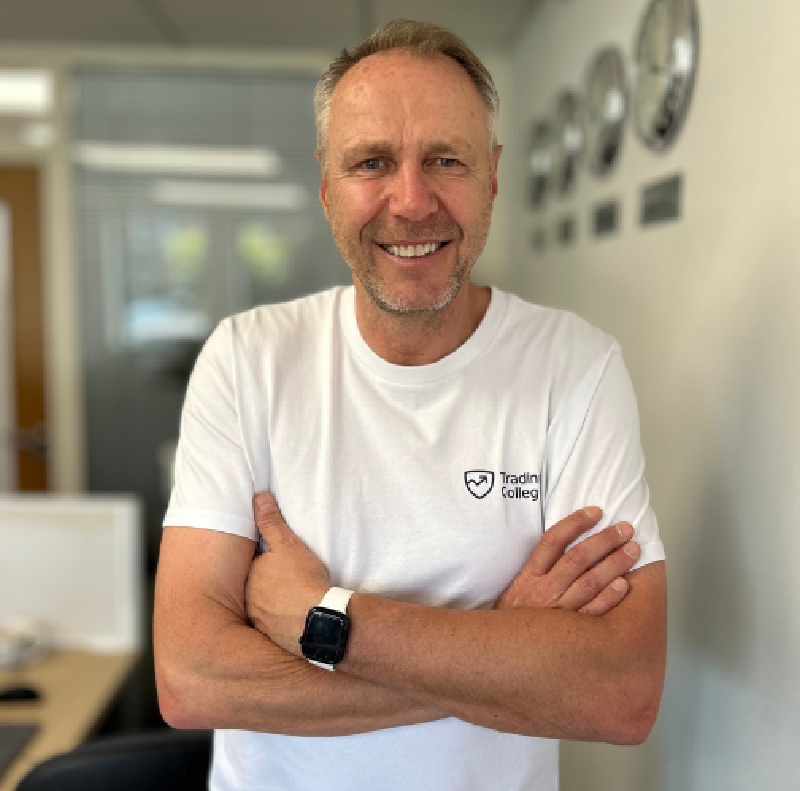
Meet your hosts:
Episode 150
Mo Latif Interview
Episode 178
Nick James
Episode 185
Neil Stafford
Episode 155
Travis Lee Interview
Episode 159
Jimmy D Brown
Episode 144