

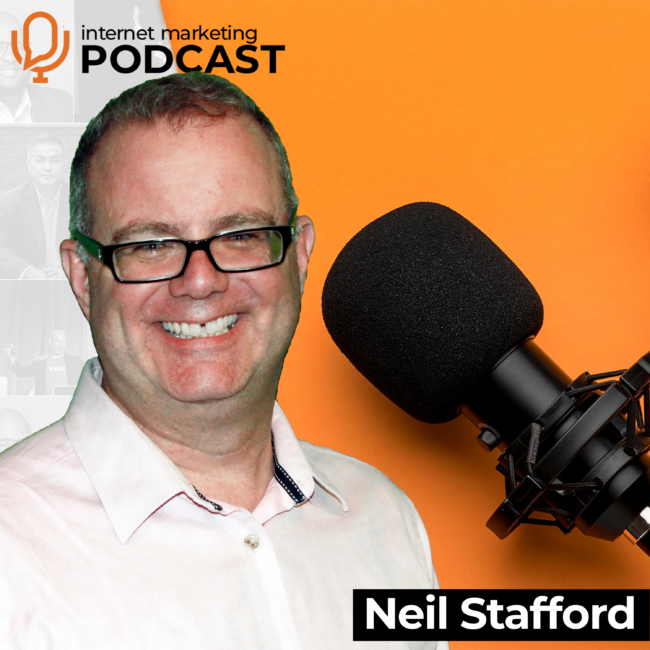
About this Podcast:
Today’s guest is Neil Stafford, an entrepreneur, business mentor, and expert in building successful membership businesses. Neil has spent years helping entrepreneurs turn their knowledge and expertise into recurring revenue. So today we’re going to find out how to create a membership that people actually want to join, how to keep those members engaged and how to increase their value over the long term.
Episode Transcript:
Editor:
Today's guest is Neil Stafford, an entrepreneur, business mentor, and expert in building successful membership businesses. Neil has spent years helping entrepreneurs turn their knowledge and expertise into recurring revenue. So today we're going to find out how to create a membership that people actually want to join, how to keep those members engaged and how to increase their value over the long term. Neil, it is great to have you with us.Neil Stafford:
Yeah, thank you very much.Editor:
Well, before we dive in, maybe you could start by giving us the quick version of your background and how membership businesses became such a big part of what you do.Neil Stafford:
Yeah, it's one of those things when you've been in the business so long, you feel like a dinosaur, but I made my first sale online way back in 1998. It was for an oil painting, that's a story for another day, but that really said, "Yep, there's a possibility here." I lost my first membership site in 2003, and that was one aimed at people who coaching on junior soccer teams. Previous to that, I did printed, published subscription newsletters in 1990s, and I always joke and say, "Yes, I'm that old." One was about travelling in the Caribbean, one was about mountain biking. So I've had subscription and recurring revenue businesses in my blood for a number of years. Then over time, the internet came along, we moved it online, and that grew into what I would know as an info publishing business or an education business. We've done many different niches, many different markets. We've helped people grow and start their own online businesses, but today primarily focused on people who have membership sites and helping them grow it.Editor:
Well, starting with the basics, what would you say actually makes a great membership business?Neil Stafford:
Yeah, it's interesting because what people have signed up for or what people sign up for and have a monthly charge for has changed over the years as technology has changed, as our access to information has changed. So a prime example was way back when we did the Caribbean Adventure Journal. That was a newsletter, printed newsletter. My wife and I, or girlfriend and fiance back then, we would travel to the Caribbean twice a year, and all I did was take photographs, made notes, and had an old camcorder that we'd take photographs. And then we'd talk about our time in the Caribbean, what we did, and we called it the Caribbean Adventure Journal, so it's off the beaten track. So people buying that we found were dreamers and doers, and there's nothing wrong with either one of them. So there's people who would live through our eyes and our visits and love to hear about the different places in the Caribbean we went to, loved to see the pictures. Now remember, this was a printed newsletter, single colour, or black and white as people call it. So we'd put photographs in there, but they were single colour. Now, as an upsell, we'd sell some photographs and we'd sell some of the video as well, which is an interesting one. That worked very well with the mountain biking newsletter that we did. I would go and ride with different clubs around the UK. I'd take videos. And again, it makes me smile because today it's so much easier. You GoPros on your helmets. We had cameras strapped on the bike and that would be filming it. And then we would film different riders of the club and I would get filmed as well and we'd sell those VHS cassette tapes back in the day. But with the information in them, people would buy it for dreaming because they'd want to do it or because they were going to do it. So people who were going to the Caribbean would use our newsletter as a guide to go and find a place to go to or write Word of Neil and Caribbean, I'd like to go and do that. Same with the mountain biking. It was a lot of people who would like to see how other people ride, how I ride. So the information was dreamers and doers. And over time now, can you imagine selling a VHS cassette now, you just couldn't imagine it because you can go on YouTube. Why would somebody buy it now? That's what's changed over the time. So a reason to join a membership today or a subscription today when we have Google, all the AIs that are available, all the large language models which you can type in and get things back from it instantly, and it's pretty good. Yes, sometimes it can hallucinate, but it's pretty darn good what you can get back. So the reason people would buy today is for insight. The AI can't give you insight of a person, if that makes sense. I'm happy. I'll point to people and say, "Listen, you could type anything about membership sites into AI, into Google and get some good information back. What you won't get is insight. What you won't get is my expertise. What you won't get is the community or the area that I've created." So having a membership site today isn't about filling it with a million and one articles or a million one videos or downloads galore, which worked in the past. It's about getting people a result that they're looking for with your insight, with your guidance, with your help and support. And I always say people will join membership sites for a number of reasons. And the first one is they'll join for the content or the outcome that you are promising them. They'll stick around for community. You've got a community in there. Now that doesn't have to be a Facebook group. We've worked with people with Slack channels, with Telegram channels. The community is a one-way community developed around an email list. So the owner of the membership communicates and creates a community with the words he uses in his email list. It could be meeting online like Zoom once a week, twice a week, once a month, that creates a community. So people will stick around for community. Now we found that they will go deeper with you. You'll get better connections or start to make better connections with what I call commerce. So they join for content, stick around a bit for community, go deeper with you for content, and that's other products and services that they buy from you. So it's not content in the membership, it's commerce that you sell to them. And yes, you can sell to people in a membership. They're paying you to be in a membership to get a result, but if they want other stuff from you, extra stuff from you to go deeper with you, then you can sell your other products and services. And then they'll go further with coaching, help and support. So that's another C. So you've got join for content, stick around for community, go deeper with commerce and go further with coaching, help and support. Now, some people say, "I'm not really a coach, but I want to do a membership site." Well, don't call it coaching, call it help and support. I call it coaching because it sits in with the four Cs that we've done so far. So I call it coaching, help and support. But the secret sauce to any membership, any subscription programme is they are four great pillars, but I will die on my soul. This is a hill I will die on, which is the secret sauce to any membership site, any subscription programme is the final C, the fifth C, which is connection. People will stick around for not just months, will stick around for years for the connection they feel they have with you, your membership or the community, the thing you've put together. Because being blunt, if somebody's with you for 6 to 12 months, they're going to learn most of what they need to know. Think about it. If you can't impart your knowledge to get them the result they're looking for within six to 12 months and there's something wrong. So why should they stay around? Well, they stay around for the four things we've talked about, but connection, connection with you. We've had members and customers have been with us now 15 years, 16 years, 20 years plus. We still get emails and notes and Christmas cards of people who've been members in various membership sites, and that's a connection. And I always say it's a connection real or imagined depending how you position your site. We've had great connection, made some great friends over the years with the members we've had in our various membership sites. But if you can, I won't use the word manufacturer, if you can implement strategic retention content into your membership site, and that's not just the how-to, that's retention content that makes those connections, weaves in you, your membership into their life, then you'll have people who stick around for years.Editor:
I think one of the things that stands out there is that when people join a membership, it's almost like joining a club in many ways or a tribe as a lot of people call it these days. And if you can nurture that feeling once people have joined, that's when they're most likely to stay with you. Of course, over the last few years, we've seen a huge explosion in membership sites and subscription-based services. I'm thinking like Netflix and even companies like Adobe have really got into memberships as a way forward or subscriptions as a way forward. What kinds of businesses or niches or expertise lend themselves particularly well, would you say, to the membership model?Neil Stafford:
Everything from business, hobby, niche, the weird and the wonderful basically. So give you some examples. So we have what I call a meta membership. It's a membership site for membership site owners, surprise, surprise. But that is run very differently. The way I work, it's for a particular type of person who has a membership site, so it's lower numbers, higher price. We've worked with people who have a membership site with downloadable crochet patterns and you think, well, surely you should be able to get them from anywhere on the membership, on the internet. Why should I pay for that? Well, they're paying for the person's expertise. They're paying for the patterns she creates and they're paying to be in her world because alongside the downloadable patterns, she also has a magazine, she calls it digital magazine that goes out and she has great connections with her subscribers. So yes, they could go and download it, but it's not these ladies. It's not this. You're either in or out. And that's one of the pillars of strategic retention content is you create a them and us. Us as people who aren't members, them are all your members. You say, "Oh, for example, I'll use myself in the example. So are you in Neil's membership site?" "No, I'm not." "Nevermind." And that's the feeling, them and us, you stand against. So one of the things I have a bee in my bonnet about is people who say you can only have a successful membership site if you run it launches. So you have to run a big launch, then open doors and then close doors and then not open them again. To me, that is absolutely crazy. First of all, the premise they sell on is, well, if you only open a couple of weeks a year, it means you can then look after your members for all the other time. Well, no, baloney, because there are very few membership sites that need to be run and open and close. Very few. Now, for example, if you have somebody who, say for example, you have a programme where everybody has to start on the same date and go through it, well, that's a course, so it's not a membership site. Secondly is I would rather have people joining every single day and multiple joining people joining every single day and see my membership grow than rely on two, three, four, even five launches per year to bring people in because you have a single point of failure. If that launch doesn't work and you've said we don't open doors again for another four months or three months or six months and you do, well, you've just lost all credibility. Secondly, when people say, "Well, you have to sell every day with a membership site." No, you set up campaigns, conversion campaigns that bring people in. We'll talk about that a bit later on. But if somebody wants to join and you say, "No, sorry, we should join the wait list," okay, I'll go and find somewhere else to buy it from or join a membership site or get the help that I need. And secondly, with a launch, you have to sell. You have to sell on the launch, you have to sell hard on the launch because if you don't get the numbers in again, you're going to be stuck until you open doors again. And the final one, I'll get off my soapbox in a second, is you still need to market. You still need to build your list. You still need to keep in touch with your list. You still need to keep in touch with your audience, social, email, wherever you have your audience ready for when you open the doors again. I've worked with, I don't know, certainly multiple dozens now of membership site owners who've run the launch model and over time in their market, each launch has brought less and less people in because they are hitting a point where the spending. So for example, I worked with one person who spent 50 to 70,000 US dollars per launch just to bring the people in to get them through the door. And his launches over time were going down and down. Now, they were still big numbers, but they were going down and down. So there is a thought process where I've created a them and us. So them are the people who use launches, hype, start a relationship off with a member by saying, beat them around the head, "You've got to join now. I've got a deadline. You got to join now with a launch. There is a true deadline, which is good, but if you don't join, you can't join for another three months and you can get lost. Why on earth would you start a relationship like that?" So they are them and us people in the know, we quietly get on with it and have members joining every single day. We don't need to worry about a big launch or the stress of it, et cetera.Editor:
So I guess in a way, lead flow is absolutely crucial for this. So how do you consistently find the right people rather than just generating leads?Neil Stafford:
It's interesting because when I look at a membership site, there's three problem areas which people struggle with, which is poor lead flow, which is inconsistent new members or low members or what I call patchy retention, the leaky bucket. They put people in, but they leave quickly. So if we get the lead flow right, we get consistent hot leads and hot leads are exactly what you've just said, people who are interested in what you offer, how you can help them. If you get lead flow right, it actually improves your conversion to bring people in and it improves retention. So it all starts right at the beginning. So I say retention happens before the sale. And what I mean by that is it's the content you put out, the people you attract will help with your retention. So the thing with membership sites, and we've got to acknowledge it, is we've got all this great stuff. We can help you get the result you're looking for, except it's behind this paywall. Get lost unless you give me some money. Now we can flip that on its head and we can put great content out there that not only showcases your authority, highlights your expertise, makes connections with people before they join, but importantly, it highlights your style, your tone, how you approach, because everyone's got their own style. Somebody called me once a stern but loving parents. I was like, "What do you mean by that?" He said, "Well, you always want the best for us, but you'll take no rubbish." And I was like, "I think that's a compliment." So my content reflects my style. If somebody doesn't like my style, they're not going to join, which means they're not going to join and leave and have poor retention, if that makes sense. So it's people, it's a content that you put out there. So when you grow your audience, which is one part of bringing in hot leads, it's the content you put out, the written, the audio, the video that says, "Hey, this is who I am. This is what I do. This is why I'm an authority and showcases my expertise." It's not necessarily teaching content, it's content that bring all those three in, expertise, authority, connection. Once we get that right, we bring people into our world. And then once they're in our world, whether it's on email list, still a big favourite of email and sending email marketing combined with a platform of choice, a social platform of choice plus YouTube or podcasting, whichever one you prefer, we bring people in on our email list and into our audiences. And then we have what we call a communicate to connect strategy, which the content we put out does that, builds expertise, showcases, builds authority, showcases expertise, makes connections with people, shows who we are and how we can help them. And that content will also demonstrate we know how they feel. So we have a campaign called The Three Mistakes, Three Techniques, which is basically we highlight three mistakes, errors, things people do that they shouldn't be doing. And what that says is, "Hey, I understand you. I get you. You're not alone. I've come across this before." Then we have the three techniques. Now, techniques could be tips, ideas, but again, you know me, I like everything to fit neatly. So it's 3M, 3T. So three mistakes, three techniques, but your techniques could be tips, ideas, information that can help them. And there you're showing, "Hey, look up. I understand it, but I also know how to fix it. I'm demonstrating my authority. And listen, if you do this, this and this and follow this process, you'll be able to fix that mistake that you had." So it's strategic in what you do, the content you put out to bring people in. Once they're in, content that will connect with them and show them that you, your membership is the place to be. And then we initiate interest. We get hand raises, not physical hand raises, but we put content out that invites them to take the next step with us, which could be to join, but it might be to, if you're on webinars, join a webinar to watch a VSL. If you have a high price membership where you take phone calls or sales calls, it might be to jump on a call with you. But you will get better conversions, better click throughs, better engagements by having the right people in. You've already connected with them. So when you say, "Hey, this is what we do," the people are more likely to go, "Yeah, I'm prepared to take that next step," because nobody wakes up going, "I want to join a membership today," do they? They wake up with a problem, a goal, something they need to find out, and that's when they go looking. So they find your content. I always say, once they find your content, they go through some stages, and those stages are, they might watch a video, read an article, listen to a podcast, and they say, "Oh, first stage is you get it. You understand the market. You understand the problems that are out in the market." Then they go a bit deeper with you. And the next step is, "You get me. You understand me. Not only do you get it, you get me. You know my problems, you know my issues, you know my worries, fears, and anxieties." So the next stage they go through then is, "You know what? You've got it. You've got the solution, but at this stage, you are still one of many. You've presented your membership site or your product and they've gone," Yeah, that looks pretty good. I know that you get me and I know you understand the market, but there's this membership here, there's this product here. "So they need to go through that stage, and that stage can take minutes or weeks. And once they go from, "You get it, you've got me, you've got it," it's, "You've got me. You get it, you've got it, you get me, you've got it, you've got me." And then it's, "I'm in." And people will try and go from, "Here's my content, come and buy." Now it works. We know that one to 3% of the market are ready to buy now. A lot of desperate people out there will answer straight away, so they will click. But what happens to the other 97%? Where are they on that chart? So poor lead flow to consistent hot leads, grow your audience, get those communicate to connect strategies, and then initiate interest into your membership. And I call that part, we help people show up and show up and shine online. They get that right, they'll be bringing those people in.Editor:
I was going to say, in your experience, Neil, how realistic is it to get new members every day and what needs to be in place to achieve that consistently?Neil Stafford:
Good question, and it leads exactly on. So as I said before, the three problems people face is poor lead flow and they want consistent hot leads. Then they have small member numbers or inconsistent new members. They get a new member and go happy dance around the room, but where do they come from? They just don't know where they're coming from or when the next one's coming in, and they want to go and see new members every day. And to do that side, so the first part is the attract system we spoke about, show up and shine online. Next one is our convert system. We need a conversion system in there as well. And again, break it down to three. So to have new members showing up every day, we've got our lead flow right. Once we've got our lead flow right, we then put outstanding offers together. So we need to make sure we have an offer, let people read it and go, "That's what I want." So your sales letter is not the offer, your membership site is not the offer. A lot of the promise and how they will get there is the offer. What will they get to get to the place they want to be? So again, with membership sites, we are in a fortunate position. We can have a handful of different offers to bring people in. So we ran a site called Junior Soccer Coach, which was aimed at the parents of coaching kids six to 16. But if you are coaching a soccer team, you've got multiple moving parts within that team. You've got to train them, you've got to deal with parents, you've got to run the team. Then on game day, you've got to have a goalkeeper, a defence, a midfield, and an attack. So if somebody found our site and they had a problem with scoring goals, so goal picker's fine, they're keeping clean sheets, but they're just not scoring. And I said to them, "Hey, join Junior Soccer Coach. We'll show you how to defend so nobody can score past you." That person is going to go, "I know how to do that. I'm off." So no matter how good my offer was about defence, they weren't buying or joining because the defence is good for them. They had problems scoring goals. So as a membership site, your membership will have a number of pillars that you can present to your person and say, "Well, we help you." So with membership sites, I help you attract perfect prospects, convert them to happy paying members and have those members stay and pay you happily for years. Which ones you need help with? So if you think about your membership site, there's going to be three big rocks, three big pillars, maybe four, usually three. So at Junior Soccer Coach, we could have an offer about goalkeeping, defence, midfield and attack, how to train. Dealing with parents was a massive one. We could go and talk about that for hours, but we created entries into our membership site. We said, "Hey, we can help you with your attack, help you score more goals per game. And the offer we have is this and say a Junior Soccer Coach membership site, and when you join for this, you also get all of this as well." So we led with the attack problem they had, but they also had dealing with parents, goalkeeping, midfield, defence was fine for them. They think, "That's what I want." So put your outstanding offers together and don't think one offer. Mistakes membership site people have, one long sales letter, one long VSL trying to shove everything down people. Now you should have your core sales letter, your sales message, but think what else does my membership site help people with that I could lead with to bring them in? So once you've got your offers together, we have conversion campaigns. So we have our connection campaigns where they're just coming into our world, dragging them deeper into our world. The conversion campaigns are campaigns designed to get them to join our membership site. So it might be a VSL campaign. It might be a trial offer campaign. It could be a campaign for a webinar. It could be our Y2K, which is not year 2K, it's a different one campaign that we have. We have multiple campaigns hitting the market at different stages where they're at and for different reasons. And off the back of every conversion campaign is a... Sorry. Yeah, conversion campaign is a conversion event. And it's a fancy word for saying, "How do you take the money?" So what's the conversion event? A sales letter, video sales letter, a webinar, a phone call, a DM. For Junior Soccer Coach, one of the things we did very, very well is we sent people straight to the order form. If they've been on our list and on our brand for a while and have binged our content, they already know that we can help them. They already know us, they like us, they know we are the place to be. So why do I need to send them to a long sales letter? Just send them to an order form with the recap of what they're going to get, click to buy. Don't over complicate it, but we can only do that if we have consistent hot leads and moving them through the campaigns that make those connections with people. So outstanding offers, conversion campaigns and conversion events are what will help you start to see new members every day. And that you can combine that with your email marketing and your social channels, your YouTube channels, your podcasts. You can combine them into your conversion campaign to start seeing people join every day.Editor:
In terms of your expertise, I know you have a training system, thetrainingvault.com.Neil Stafford:
Yes.Editor:
Do you also go into things like how do you create content that is sticky, keeps people engaged, keeps people wanting to remain a member? Because of course, getting a member is one side of things as you say, but then people eventually might want to leave. What tips or tricks could you share with us for those people that perhaps are suffering with people wanting to leave their membership sites?Neil Stafford:
Yeah, it's a good one. It's a secret, not so secret to a successful membership or a subscription programme is a great retention. You don't have good retention, it is that leaky bucket. You're going to be throwing people in the top and they're going to be spilling out very quickly at the bottom. So the third pillar that we work through is the problem was patchy or poor retention and we want to have them seeing members who stay happily stay and pay for years. So again, we break that down to three areas. So the first one is a world-class welcome. And what I mean by world-class welcome is people who join your membership, join your subscription, and there is a deliberate path they go down and things they see, do and read before they join your main membership. And I always liken it to imagine you get somebody and throw them or plunk them in the middle of a motorway or a freeway, and there's cars whizzing by everywhere. Everyone's going at the right speed and they're just sat there. They're going to be, "Oh my word, I am in the wrong place." So if you have a new member and just dump them into your membership site and say, "Here's your login, here's your username and password, go and read this first tier," that's just like throwing them on a freeway or motorway or in the middle of an ocean in a small boat, not knowing what to do. We have a world-class welcome, so it's three parts to that as well. In the world-class welcome, it contains a warm welcome and a warm welcome doesn't necessarily say thank you for joining. It's welcome, you're in the right place, you've made the right decision because they've read your sales messages, they've been in your world, they are excited to buy. What we got to remember is as soon as they click the join button or the buy button, buyer's remorse will start eating away at the back of their mind. Have I made the right decision? So we're excited to see them. We know what we can do for them. They were excited. They've just paid money and they've come into the site going, "Have I made the right decision?" Because up until this point, they haven't been behind the scenes. So up until this point, they're excited and then we go, "Look at all this stuff you've got to do. Read all these articles, watch these thousands hours of videos and download all these tools and templates and join this AI thing I've got." It's like, "No, I've made the wrong decision." So the world-class welcome, warm welcome, great decision you've made. This is what life is going to look like for the next few days, next few weeks. It's reiterating to them they've made the right decision. So warm welcome, great expectations, a little bit of literacy there, shall we say. So great expectations, which is setting the scene of what's going to happen. So day one, great, this is what you're going to do. Day two, this is what you're going to do. Day three, day seven, we're going to expect this by day 14, 21, 30, month, first quarter, first half year, and in 12 months time. So you're setting the scene for them, and it's a psychological way, an under the radar way of saying, "Hey, we're in this journey together." It's not just a join for a few weeks or few months because in 12 months time, your life is going to look like rainbows and unicorns by being in this membership and we're going to be with you every step of the way rather than saying, "Hey, there you go. Off you pop. There's all the information I've got, help yourself." So the final part of the warm welcome, great expectation is winning ways. So we give them something where they can get a small win. Now, a small win is not go and watch this video series. A small win is don't do this over the next two weeks. A small win is do this now, see a result immediately or within 24, 48 hours. And it's something as simple as go and say hello in our community. That's a win. I worked with people who were in the declutter market and their quick win, you ready for this? The quick win was go and rearrange a knife and fork drawer, and here's how you do it. Take a picture, upload it into the community. So they went away and put all the knives and I just throw mine in, but my wife hates it. "But put all your knives and forks in the right way, put them this way around in your spoons like this, take a photograph, upload it. That was their quick win. How do you think that person felt when people say, "Oh, great, looks fantastic"? They've got a quick win. It might be send this email to everyone who hasn't bought from you and give them this offer. It could be with Junior Soccer Coach. It could be," Here's a parent charter that you can get people to sign at the next meeting. "And it tells them how treat the club with respect, the coach with respect, that type of thing. It's things they can do very quickly within a day or two that will get them a result. So the work class welcome is just one part of the retention strategy we have, which is warm welcome, great expectations and winning ways. We then have our strategic retention content, which we spoke about. You have your how-to content, you have your content that gets them a result, but weaved in that and separately is content that helps them get deeper connection with you. It consistently, not constantly, but consistently reminds them they made the right decision to be in your membership. We need to resell it because they're paying every month, so we need to resell them every month of how lucky, how fortunate, what a great decision they made to be a member within your membership site. You create the them and us. You have challenging content, you have content that initiates a response. You could have content that makes them angry, but it gets a response. But it's content where it's designed to weave you more into their lives, into their psyche so they know they're in the right place. And the final part of the good retention, so you could go from patchy retention to members who stay and pay forever, I call it active ascension and reactivation. So active ascension means offering other products and services. So not just paying the member. They may be other products you offer. There may be services, you may have coaching programmes, masterminds, events, other products. The more people invest with you, the longer they will stay with you. So you've got your membership, but somebody who's bought product A, B, and C and has come to an event or has paid for some coaching, they will stay longer. That's one thing you can guarantee. And it'd be interesting to see if people can go out and do that analysis to say, right, of the people who've stayed the longest in my membership site, what else have they bought if you sell other products and services? And so that's active ascension and active reactivation. So very quickly, two ways people leave a membership is active cancellation is when people say, "Please cancel me," or they go in and cancel themselves. Passive cancellation is where the credit cards have bounced and they haven't been rebilled. So active and passive you can keep separate and should treat them separately. So people who've said, "I'm out of here, cancel me," for whatever reason are very different to the person who's gone, "I'll get round to updating my billing. I'll get round to it." And there's a story there where I was speaking at a conference once, this is many years ago, and the guy came up to me afterwards and said, "Oh, Neil, glad you're here. I've been meaning to renew my membership. I've changed my credit card. Can I give you the details?" "Yes, you can, Karen." My wife should take the details off Joe, whatever his name was. And then we got back to the office and let's have a look. And we had a look and he'd had about 15 or 16 touchpoints and reminders to renew his credit card and renew his membership, but he hadn't done it because life was busy and got in the way. Now that told me we needed to increase our touchpoints back then. So we now have a dedicated campaign for people who cancel themselves and people who credit card bounces. And there was a stat, I was working with Recurly and they said something like, oh, is it industry that approaching 70% of people who run a membership site don't have a follow-up process if a card bounces outside of the merchants, the three emails, "Please update your card, please update your card, please update your card. Cancel." Nearly 70% of membership site owners don't have a process in place past that. And then Recurly showed a stat that was 62 or 63% of people who have... Sorry, people who extend the win back campaign for passive cancellations to 30 days can recapture over 60% of those people whose credit card bounced. So if you just rely on those three emails, you're losing bringing back in nearly 60% of those people. Think how much money that would cost you over a year by just extending that to 30 days. And again, we've got campaigns that do that and for longer as well.Editor:
Unbelievable. I mean, those stats kind of speak for themselves, don't they? But also I like the fact that what you're saying is that when people first join, there's almost like an emotional connection that you're looking for, that take action, making that emotional connection. And that's super important with something like this because the internet can be faceless and to have something like that, that quick win idea of go and tidy your knife and fork drawer, I can imagine that works incredibly well. For anybody who is maybe still sitting on the fence, they like the idea of a membership site and taking this idea forward, what's your advice to them? What's the first step that they should take?Neil Stafford:
I would take a step back actually and say, right, what can I help people do? And you don't have to be the all-seeing expert guru. Everyone's got life skills. Everyone's got skills they've developed over time. Everyone's got skills they can go and learn, but what result can I help people get? What problems can I help and solve for people? There are memberships who are community driven, which are. What I mean by that is it's a place where people belong and in this AI-driven world, that is becoming more and more prevalent that people want human connection. So there isn't a one size fits all, you must do this. What we're seeing working very well is having a core outcome. So if they join, then they will have a core outcome, but there is a community attached to it, there is help and support attached to it, and there are what I call satellite information plugged into the main outcome. What I mean by that is you join to get an outcome, you stick around because the community, and then the membership site owner will add on. So say for example, there are 10 modules that they could go through to get a result, but each module will also have bits of it that they may want to improve. So you start with your core module, your core pathway to get them the result, but why would they stick around once they've got that result? Well, they can improve by going through your satellite bits of information that get added in over time. So it's not an overwhelming pile of information that they have to try and get through it say, "I'm joining, I'm going to get this." But once they're in, they realise, "Hey, I can get help here for that and for this and there's some information here or there's a great community I can belong to." And what you can do, if they've gone through that, they are then ideal or primed for if you run a coaching programme to go up to a coaching programme, if you ran a next level part of your membership to get more results or to grow or do whatever it is, then they could join the next higher price part of your membership. So one of the memberships, well, Junior Soccer Coach was 9.95 a month, and then we had a 99 a month. We ran one called the Internet Marketing Review. Very quickly, very interesting. That started off as a printed newsletter about internet marketing and we only added the membership level to that round about 2003, 2004. But we had different levels. It started off, believe it or not, it was a printed newsletter for 9.95 a month. It might have been 50 pound a year at one point, it was UK based. But over time it moved to $49, $99, $200 a month, and we had coaching programmes around it. So pricing and outcome don't dictate the restrictions on your membership. Your membership can lead people wherever you want them to go.Editor:
For anybody who wants to move this forward and wants to find out more about you and also perhaps even work with you on their membership site, where's the best place to track you down?Neil Stafford:
It's interesting actually. The home, as they say, is thetrainingvault.com. We're just going through an upgrade at the moment on there. So there's a holding page, but loads of information on the holding page. Info@thetrainingvault.com, send your question in, say hi on there or you can reach me on the socials, you can look online. Revamping our YouTube channel, so keep an eye on that. So our main one's going to be thetrainingvault.com. Social is Neil Stafford online, and then the YouTube channel, Recurring Revenue Insider, which is the site we run for membership site owners. But it's for people who are up and running already, not to start a membership. That's a completely different offer that we have.Editor:
Amazing. Thank you for your time, Neil. It's been a fascinating chat.Neil Stafford:
Perfect. Thank you for having me.
Meet your hosts:
Episode 136
Travis Ketchum Interview
Episode 183
Chad Kirby
Episode 130
Paul O’Mahony Interview
Episode 179
Donna Kennedy
Episode 140
Igor Kheifets Interview
Episode 159