

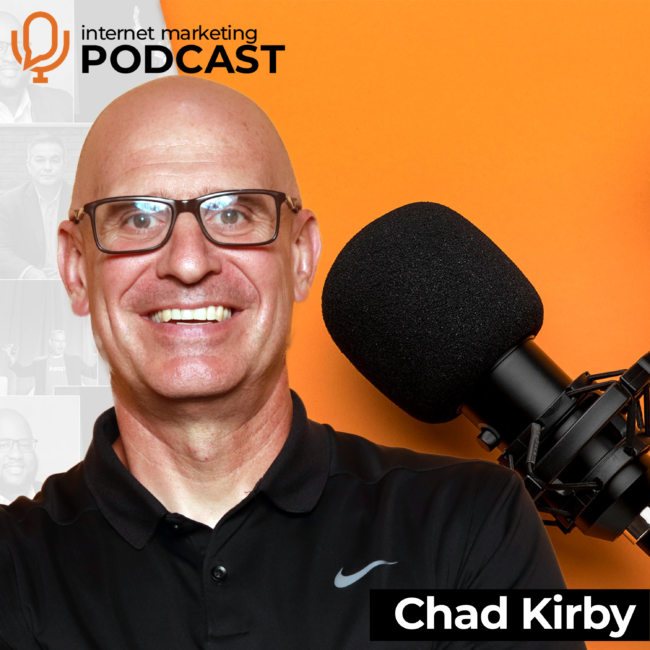
About this Podcast:
Today’s guest is Chad Kirby, a speaker, educator, a master communicator who’s been part of the online business world now for well over a decade. Many people first encountered Chad through his time at Infusionsoft, where he became known for his ability to sell from the stage and connect deeply with audiences. Well, since then, he’s carved out a unique position for himself by teaching through storytelling, using stories to educate, persuade, and inspire action.
Episode Transcript:
Editor:
Today's guest is Chad Kirby, a speaker, educator, a master communicator who's been part of the online business world now for well over a decade. Many people first encountered Chad through his time at Infusionsoft, where he became known for his ability to sell from the stage and connect deeply with audiences. Well, since then, he's carved out a unique position for himself by teaching through storytelling, using stories to educate, persuade, and inspire action. Chad, it is great to have you with us.Chad Kirby:
Oh, it's great to be here. Love spending time with you.Editor:
Well, let's start right at the beginning, if we can. How did you first get into speaking and communication, and how did you find that you enjoyed it so much?Chad Kirby:
Actually, I didn't realise that I was necessarily good at it until I started people being moved by what I was saying. And so I realised, wait a second, I can learn how to help inspire people to get them to take action. And so I was watching people, and then I started watching other people communicate. And I was watching people get up and give these amazing presentations or communicate very what I perceived powerfully. And then nobody did anything because of it. And I realised, wait a second, people need to understand that there's a way to help people not only listen and learn, but also take action. And so that's the key, because at the end of the day, if we're not taking action, then what's the point of the communication?Editor:
So did you study other speakers to find that inspiration for yourself, Chad? Or, again, was it one of those things where you found that once you immersed yourself in it, you just became a natural?Chad Kirby:
Well, first of all, I immersed myself in it first. And so I was like, there was a lot of trial and error, like saying, "Okay, this works, this doesn't work." But then it really went from black and white to colour when I started coaching other speakers to be successful from the stage. And so then I started realising not only what worked well for me, but then when I had to start coaching it, I had to take what naturally was working well for me and articulate it in a way that helped other people consume it and then go execute.Editor:
Well, I'm sure a lot of people remember you from your time with Infusionsoft, and I'm sure that was a great time for you in your career. What did that teach you though about persuasion and influence?Chad Kirby:
Well, what it taught me about persuasion and influence was that you really have to quickly get to people's pain points. And so let me back up a little further. When I was speaking on behalf of Infusionsoft, I often went and spoke on behalf of the CEO. And so I wasn't the CEO. So I had to show up with people anticipating it was going to be the CEO, and then it's somebody else.Chad Kirby:
In fact, one event that comes to mind is there's a very big radio personality in the United States by the name of Dave Ramsey. And he's the second-largest radio personality in the United States. And he invited the CEO of Infusionsoft at the time to speak in between Dave Ramsey and then they had a former President of the United States George W. Bush. And so they were thinking that would be the lineup. Well, it wasn't. It was actually me.Chad Kirby:
And so it was like, wait a second, I'm going Dave Ramsey, me, George W. Bush. And I quickly realised that people were going to be like, "Who's this guy? Why is this guy in between?" So what it really taught me is people truly don't care about your credentials as much as they care about your ability to solve their problem. And so obviously when you don't have the credentials to being a former President of the United States, when you don't have the credentials of being a top syndicated radio talk show host, I had to quickly get to their pain in order to capture their minds so they can go, "Wait a second, does he have a solution for my pain?"Chad Kirby:
The only reason why people are listening to you is, can you help them live a better life? Can you help them achieve their goals? People think to themselves, "Oh, they just want to hear from me." At the end of the day, and we all know this, everyone's favourite subject's themselves. And so the quicker you can get to how they win by listening to you, the faster you'll be able to capture their hearts and minds.Editor:
Absolutely true. And the fact that you spoke with both Dave Ramsey and George W. Bush, how did you feel at the time? Were there any nerves, or was it water off a duck's back, as they say?Chad Kirby:
There were certainly nerves, right? There were a lot of nerves involved as there was when I shared the stage with a lot of people like a Simon Sinek or others that have maybe name recognition, and you don't have that same level of name recognition. Now, what I will say is this, do not discount yourself because you don't have that name recognition because if you can solve somebody's problem, if you can help people be more effective, if you have experience or you've been through experiences that have created a message for you, then don't discount yourself. Never discount yourself for that. So yes, I did have nerves, but at the same time, I knew that I was going to help them get to where they wanted to be.Editor:
Anybody who is listening to this or who is reading this, and they still suffer with those nerves, do you have any little tips or tricks that you could share, some takeaway points so that, again, we could overcome that fear?Chad Kirby:
Yeah. The best way to overcome the nerves. Now, I'm not going to say they're never going to go away. Because there's actually what you really need to is help yourself understand that those nerves are generated from excitement, not from fear. And so when you focus on the fear element of those nerves, then it can be detrimental to your delivery. It can be detrimental to your presentation, but if you focus on those nerves of excitement, those nerves that I'm about to make everyone's life better here. Now, when I'm speaking, I will take opportunity. I'll take moments to where I really get myself excited and try and translate those nerves from the fear space to the excitement space. And if you're clear on how you help other people, if you're clear on how your message is going to impact the audience, then it's easy for you to transition from that fear to that excitement. So don't try and get rid of those nerves, just translate them into excitement.Editor:
So kind of lean into it is what you're saying, I guess.Chad Kirby:
Absolutely.Editor:
I think a lot of people also fear the fact that they may get on stage and their mind goes completely blank, and they're going to be stood there, stage fright, looking out into an audience, not really recalling anything that they want to talk about. Have you ever experienced that, Chad? And if so, how did you overcome that?Chad Kirby:
Okay. So the key that everyone really needs to lean in, as you use those words, into vulnerability. So some of my greatest presentations have been when I've had mishaps, when I've had where slides didn't work the way they were supposed to. I lost my train of thought. And if you stop and just go, "I can't believe this. I just lost my thought in front of all of you," and you're vulnerable, your audience will actually want you to be successful because you're trying to be vulnerable. People trust vulnerability, right? And when you get up, and you are just this super articulate speaker that has that quote-unquote silver tongue, you actually aren't as trusted as the individual who may show a higher level of vulnerability.Chad Kirby:
So when you think to yourself, "Oh my goodness, I'm going to mess up." First of all, I would coach you on making sure we manage those thoughts, right? But if you do for some reason make that mistake and you just stop and acknowledge it, you will be stunned at how much the audience appreciates that and connects with you.Editor:
And how do you feel about the premise of being ... When you're doing a best man's speech, for example, and you're in a room of people who really want you to do well, no matter what you're about to say, they are going to love it because you're sharing a story. Does that really kind of encapsulate what you're saying in any situation? Almost think of it in that way that the audience really want you to win.Chad Kirby:
Yes, I absolutely appreciate that. But also the key ingredient to that is that you cannot make your presentation all about you. You cannot make your presentation all about your success. You cannot talk about what you've done in this because what I call that in my book, the credential trap, right? Because we get up, and we start trying to credentialize ourselves. And people in their mind are thinking to themselves, "Don't care, don't care, still don't care," right? They don't because they want to know, is listening to you going to help them? And if it is, yes, they're going to engage. But if you keep talking about yourself, then the opposite happens, and they really don't care about your success because you've already articulated that you've had so much success, and they're sitting there feeling bad about their own success because you've put yourself on such a pedestal that they cannot only not relate to you, but then they feel inferior about themselves.Editor:
I know that over the years, Chad, you've spoken a lot about the more you tell, the more you sell. Maybe you could just talk us through that process as well. And you mentioned your book as well. Perhaps you could tell us a bit about your book.Chad Kirby:
Well, the book is basically the foundational principles that I use to get ... It's entitled Speak and Get What You Want. Right? And so when you're speaking, how do you speak so that you can get what you want? And the reality is, Zig Ziglar said, "You can have anything in this world you want if you help enough people get what they want." And so as you're speaking, helping people get what they want is really how you become successful. Because if you can articulate their problem better than they can, then they're going to listen to you and go, "Okay, then what do I need to do? How do I need to do this?" Because what you're in essence doing is you're taking them from one side of the river to the other. You're like, "You want to get to this other side, and we're going to give you very clear stepping stones on how to get there."Chad Kirby:
Keeping in mind this, and this is a big mistake that a lot of presenters make, a lot of speakers make, is the confused mind does nothing. It does nothing. And so sometimes we'll get up, and I've heard this at events where people will get up and say like, "I have 83 marketing principles that I want to share with you." Well, the mind doesn't want to think about 83, but when you can say, "If you do these three things," and you simplify them. So some people think to themselves, the more they say, the more effective they're going to be, but the reality is the simpler you present, the more powerful your message will be.Editor:
That's great. I know that obviously storytelling is key in many ways to your success, Chad. Do you believe that people are born with that skill of storytelling, or is it a skill that you can learn as you go?Chad Kirby:
Absolutely. And I would take it a step further. Speaking and presenting is a skill that you can develop. I have nine children, and never at any point did the doctor hand me a child and say, "Look, it looks like you got a powerful speaker here." Because that's not how it happens. And so you can learn how to present powerfully. You can learn how to share stories that are impactful. The problem is with most people is they have a great story, but they're not sure how it connects to the principle they're teaching. And so you have to make sure that it connects so that people feel the flow of it, and so it makes sense, and then it takes them again across the river. But if your story diverts too far to the right or to the left, then it just ends up becoming white noise rather than an impactful story.Editor:
And do you have any tips on how you can involve the audience? If you are telling your own story, are there any little tips that you could share? Any words perhaps or phrases that can just bring those people in so they feel that they are sharing your story with you as you tell it?Chad Kirby:
Absolutely. And it is not difficult. It's not complicated. You simply ask the audience, "How many of you have felt like that before?" And everyone raised their hand. And I know that's so simple and people are like, "Wait, really? That's it? " Absolutely. You just go, "And then I showed up thinking that I was supposed to be there at 8:30 when the event started at 7:00 AM. How many of you have had that experience where you thought it was one way and it ended up being ..." And everyone raised their hand and you're like, "Painful, right?" And everyone's like, "Yes." And they're in it with you the entire way. And so it's more of an opportunity to connect rather than just an opportunity for you to share your story.Editor:
I love that. It's almost like taking them on the journey with you in many respects, isn't it?Chad Kirby:
Absolutely. Yes.Editor:
So in today's world where there's so much noise and everyone's got a million different distractions, do you believe that storytelling is still as powerful today as it was a few years ago?Chad Kirby:
No question. The only thing that is really different today is you need to give them a reason to listen to the story. And so perhaps there was a time where people would listen to a story for a story's sake, but if you give them a reason to listen to the story, and you preface the story, helping them understand that they're going to learn how to solve their pain through this story, or you do something to capture their attention to get them to engage, that's what has changed. You need to help them become hooked so that they do listen to the actual story.Editor:
Well, I know that we're rapidly running out of time today, but for anybody who is interested in finding out more about storytelling or presenting from the stage, where do we need to go to do that?Chad Kirby:
You can connect with me in a variety of ways, but the best way is you can connect with me on LinkedIn, Chad Kirby, but you can also go to my speakandgetwhatyouwant.com website. And so either one of those works great.Editor:
Great stuff. And before I let you go, I must ask, what was it like sharing the stage with George W. Bush, with an absolute bonafide US president?Chad Kirby:
That was pretty remarkable. The security was probably the most nerve-wracking part of the experience. I guess over the course of his eight years of presidency, he may have irritated some people. So the security was very, very high. What surprised me the most though was that he's just a human being. And although whether you agreed or disagreed with him politically, he was a really nice guy. In fact, I was with someone who was in absolute opposition to him, and they ended up really enjoying him. And so it's pretty powerful. And I have a lot, I share a lot of these experiences on my Instagram as well, the Speak & Get What You Want Instagram account, and you can follow me, and I'll share more tidbits there as well.Editor:
And one final question, if I may, is there anybody who you've not shared a stage with yet that you'd love to share a stage with?Chad Kirby:
Ooh, that's ... I would say Nick James, but I've done that. And so that would be, is there anyone that I have not shared a stage with that I would love to share a stage with? Oh, Alex Hormozi. I would love to share the stage with Alex Hormozi.Editor:
It's been an absolute pleasure chatting with you today, Chad. Thank you so much for your time and for your insights.Chad Kirby:
Absolutely. Take care.
Meet your hosts:
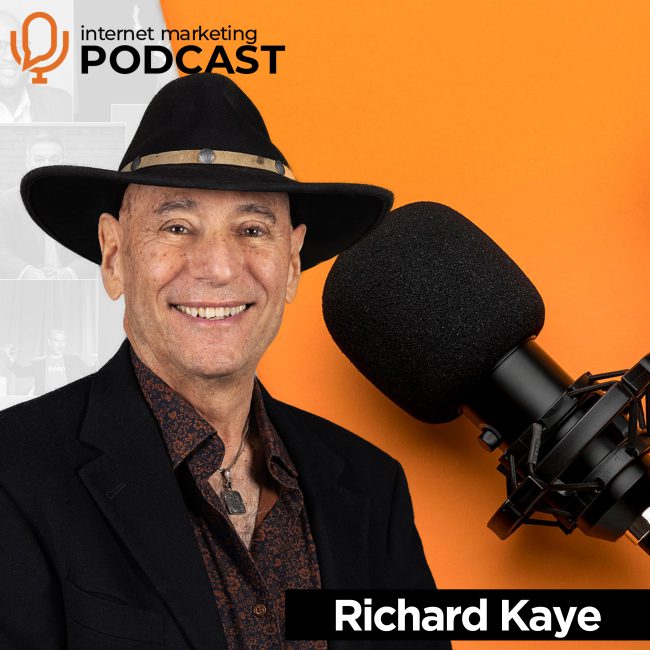
Episode 157
Richard Kaye Interview
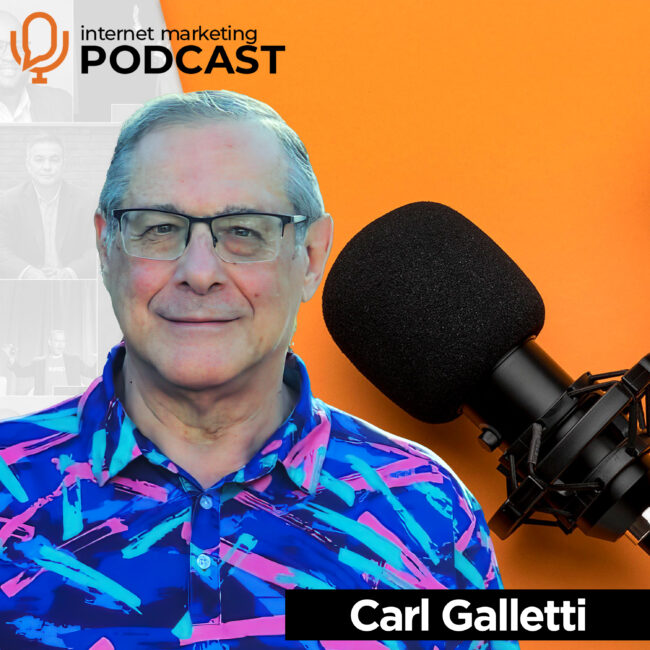
Episode 162
Carl Galletti
Episode 172
Chris Payne
Episode 142
Craig Simpson Interview

Episode 158