

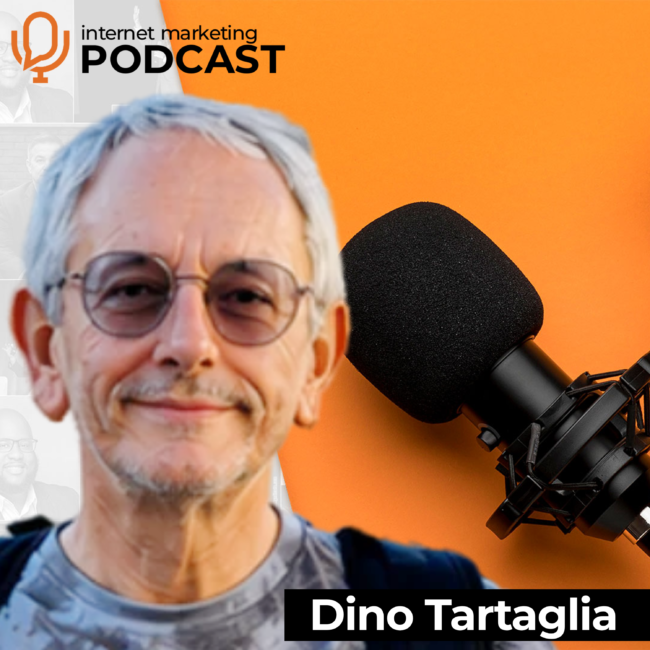
About this Podcast:
I’m excited today because our guest is Dino Tartaglia, co-founder of Success Engineers and a leading voice behind the concept of character-led business. Originally from the UK and now based in Portugal, Dino works with founders, leaders, and organisations who want to build businesses grounded in values, integrity and long-term impact. His focus is simple, but powerful. Sustainable success starts with who you are, not just what you do.
Episode Transcript:
Editor:
I'm excited today because our guest is Dino Tartaglia, co-founder of Success Engineers and a leading voice behind the concept of character-led business. Originally from the UK and now based in Portugal, Dino works with founders, leaders, and organisations who want to build businesses grounded in values, integrity and long-term impact. His focus is simple, but powerful. Sustainable success starts with who you are, not just what you do. Dino, it is great to have you with us.Dino Tartaglia:
Pleasure. Really, really pleased to be here.Editor:
Could we start at the beginning? What shaped your thinking around leadership with character?Dino Tartaglia:
Oh, that's a great question. I guess just the years and years of, probably like a lot of the readers or listeners, the time in corporate, time in employment, looking at things not being done well. And I've always been a humans-first-business-second guy. I wrote a book tail end of last year in the shadow with my business partner, Simon Hartley, who's written... He's on his 16th book now. Can you believe? And he's been badgering me for about eight years to write a book. "Mate, you've got to write a book. You got to write a book," so, eventually, I did. I wrote a book called Misaligned, Why You Get Trapped in the Yo-Yo Business and What You Can Do About It. And, in there, I talk about the journey that I went on from a young engineer. I was an electrical and electronics engineer, mainly electronics, working at oil and gas all around the world. And I saw firsthand a lot of management, but poor leadership. And it was really management dressed up as leadership, but it never was. And it wasn't great. And it always came down, I felt, to the character of the person running the job or running the team, so I fell into it, if you like, just this feeling of it's not right, it didn't fit. So I moved out of employment, got eventually into consultancy and contracting, self-employment and started getting very, very good at troubleshooting people and processes and systems as opposed to hardware, which is where I'd been. So the journey into business transformation as it became business improvement basically was quite short, but very deep. And I ended up working with companies from six to 10 billion right down to a few mates that were trying to build a business from their spare bedroom, so I saw it all. And the running theme through all of it was the better the individual and the better they... the more they focused on their business acumen and their character, the better the business, so that I came to the conclusion, which is something I wrote in the book, the business can't outgrow the character of the person running it.Editor:
That makes absolute sense. And you mentioned your business partner, Simon Hartley. My next question was going to be about Success Engineers. How did that come about? And what's the problem that you're trying to solve with this?Dino Tartaglia:
Right. Yeah, a couple of great questions again. So Success Engineers, very, very simply, I'm from Glasgow originally, but was living in Newcastle, and Newcastle has been home. Although I've lived and worked... I worked this out for the book actually. I lived and worked in 23 countries on five continents in the time that I was working in contracts. The centre of my universe, if you will, was Newcastle. It's where I got married, divorced now, with two kids, two daughters, two beautiful daughters. And they live there. So I was sponsoring a player at Newcastle Falcons. Rugby is my first love in sport. Used to play, wasn't very good, and I met Simon who was a... just when the game went professional in 1998, I think. Newcastle Falcons, as it was then called, Rugby Club. And I was sponsoring a player, Geoff Parling, who's a phenomenal player in his day. And Simon was there as a young, fresh-faced sports psych. That was his profession. And we just clicked. We just became good friends. Eventually, I left and toured, and went around. I got divorced. I left the country. I was out in Malaysia for a while, came back a few years later. And I think, 2015, Simon and I bumped into each other. And, by that time, he'd written six books. He'd become a world authority on world-class mindset and had a family, had a couple of kids. And I read a couple of his books and said, "Mate, we've got to take this out to... We've got to take this out to the market. I know just the market we can take this philosophy out to." And one of the books was Two Lengths of the Pool, which this time, working with Chris Cook, who's a fabulous human being and a double Olympian, 50-metre breaststroke swimmer, and, hence, two lengths of the pool. And the second book I read was How to Develop Character which really spoke to me. So I said, "Look, we'll put the methodology of Two Lengths of the Pool and the philosophy of how to develop a character. I'll pepper it with my stuff. And why don't we take this out as a product and a service into the space," which actually at the time was going to be the BizOps space. But what I found was the vast majority of people that we were speaking to in that space weren't ready for kind of what we had. And we were I think a little bit ahead of our time and where the industry was, so we moved into the coaching, consultancy, therapist, creative space or practitioner business as I call it. And that was it. So that was the genesis of Success Engineers. He's the success. I'm the engineer. It's very, very simple. It's where it came from. And we call that Business Mind, Business Model. He takes care of largely business mind. I take care of business model, and we fuse that together, and there's a bit of overlap. So that's kind of the genesis of it all and where it came from. And, ultimately, what we were trying to do is pretty much what the book is about. I found that a lot of people were building businesses that were misaligned. They were building a business that required a certain set of behaviours, and they were delivering behaviours that were not aligned with that, so above or below, but just not matched up. They were building a business to deliver a lifestyle that they wanted at a specific level, but the business itself that they were building was not going to deliver that. Misaligned. And the message to the market was not matched. So the market was expecting message A, and they were delivering message B. Misaligned. And I developed from that a technique or an approach called alignment intelligence, AI, go figure, which I'm now leveraging the hell out of with the Profit AI system. So that's kind of... We exist to help. It doesn't really matter what phase a business owner is in or where the business is in terms of its journey from what I call a dream-up startup. Dream it. Start it. Build it like that. There are seven phases of growth. It doesn't matter where they are. Generally speaking, the foundations are the key. And there's always something that's been missed at the foundation level when somebody builds a business, so we always take them back to that and just go, right, have we got the four or five pillars in place? Are they robust? Are you building on something that's going to shift and break underneath you under the weight of the business scaling or is it going to magnify all the good stuff and not the bad stuff? So we apply that whether you're in early stage and they're a founder or you're late stage and you've got a large team. Makes no difference.Editor:
And what are some of those foundations that you think people should put into their business? I mean, what are the horror stories you've seen, but also what are the true foundations perhaps that people should have in place?Dino Tartaglia:
Yeah. Well, I think, for the audience that we're talking to and really what I specialise in, it's very, very much about simple things, because there's that old expression, simplicity scales, complexity fails. Yeah. And Simon and I are very, very big on simplifying which, of course, is enormously hard. We lean as human beings to be wired for complexity, and we're attracted by complexity because we think the more stuff there is, the more things we have to do, the more valuable something somehow is. And, actually, the reverse is true most of the time, so we strip everything back. And I look for first of all the... And I'll throw this in. It's probably useful just to frame this. What I find is that human beings and people in the entrepreneurial space do this. They want to go fast, so they collapse time before they have clarity, which leads to like 50 shades of pain basically. It's not a good place to be, and what I call in the book a Doom Loop, pretty running around the circles, never getting out. I flip that on its head. We start with clarity, then we build conviction, or certainty for any American listeners. We use it differently I think in the UK. And then we collapse time. So get the clarity, build certainty, let's stick with that, and then collapse time because, if you do it that way around, you get to a point where you have a mechanism that works. Then you can turn on the jets and you don't amplify the problems. You just amplify the good stuff. That's not what most people do. They try and go fast, try four square pegs into round holes and have a real issue. So that's a kind of basic premise. And, in order to get all of that, we need to simplify and clarify. So that's a kind of foundational pillar. Get clarity. The big one, the big-ticket starting point for in the book and what I talk about is understanding what matters most, WMM. What matters most gives us a kind of north star, not so much a destination, more of a direction. It's, well, what do I want life to be like, why am I building this, what's the point, which is a great question. And, once we understand that for ourselves, so what matters most? Well, spending more time with the family, having quality time with the people that matter to me, having an impact in the world, what does that look like, and then eventually getting to a... And that requires a number to fuel that. So, assets in terms of capital and cash flow, what does that look like? Well, now I've got a number and I've got a setup that I'm aiming for. That's kind of my true north, if you will. I'm going to come all the way back to where I am. Having understood what matters most for me and what matters most for my audience which, again, is a key thing. No point in doing it if the audience are not interested. Yeah, so they've got to be engaged in that and see the value. So now I've got that. I'm back to where I am. The second part of this is work out. That's my point X, kind of where the treasure is, if you will. Back to point A, which is where I'm starting from, let's have a look at where I am, what resources I've got, what stage as an entrepreneur I am, what kind of acumen I've got, might be none, and understand the gap then that appears between point A, where I am, and point X, where I need to be. And then the job is to figure out how to close the gap. And one of the analogies that I use is, if you imagine that X is at kind of Oz, we're building a yellow brick road that's going to take us there one brick at a time. Build a strategy for that. This all comes from the clarity. Once we've got the strategy and the plan that flows from that, then we look at the implementation and the tactics and the execution. And I make a distinction between implementation and execution. Implementation in my language sets up the infrastructure for all of the things, the tactics, if you will, that are going to flow from the strategy to make the strategy work. Execution is the doing part. We execute. And that's something a lot of people just struggle with, which I understand. And then, finally, we adapt from reviewing and revising. So we review and reflect. Reflection, again, there's a whole chapter on it in the book, which I call Thinking Time. People don't slow down enough to reflect and think. And that's one of the superpowers of the successful. And, again, I knew that instinctively, but I learned that from Simon, looking at all the people he deals with in elite sport and elite business. They all spend time reflecting and adapting, whereas the vast majority of us in the entrepreneurial space, in the online space in particular, just keep doing and never reflect back, so we don't learn. And I call that the sawtooth effect. What happens is we build, build, build and go, "That's not working. Drop. Build, build, build, not working, drop," and it creates this kind of sawtooth effect. And that's generally because, if you look at a process curve and an outcome curve, we build the process over time. And there's latency before the outcome starts appearing. And, by the time the outcome starts appearing, we're already thinking this is not working, and we start to tail off and just give up. And that's the kind of despondency thing. If it starts working, what tends to happen is, again, we take our foot off the gas because we think, "Oh, that's it. It's working. It's off. It's away. It's got momentum," so we stop. And, of course, it needs continuous effort at different degrees and different levels or a system that's going to provide that. So we get complacent. So despondency and complacency are the two killers, if you like, of progress. And a lot of that comes about because we don't reflect and we don't learn how to look for the leading indicators that tell us that something's working early. We wait for a sale in order to know that the sales process is working. If we get no sales, we determine that it's not working, all that.Editor:
It's fascinating. I love the way you go from point A to point X as well. It almost sounds like a book in itself. But you've mentioned your book a couple of times, Dino. Maybe you could let us know where we need to go to find that book.Dino Tartaglia:
Yeah, literally, Amazon. I haven't yet got it into... I'm looking at Waterstones and Barnes & Noble and what have you, so I deliberately took... I took some advice from a phenomenal friend of mine who had a publishing company. I helped her sell that. She now is in the AI space. She's a developer as well as an author and a publisher. And she said, "Go buy a bunch of ISBNs," or book numbers, and, that way, you're not in the grip of Amazon. And give them the ISBN instead of getting it from them," which is apparently the process. So Amazon have published the book with my ISBM, which means I can then put the book into bookstores, which is the plan. But, right now, short answer is Amazon in your country, the Kindle right at this moment, and it will be for the next couple of months. The Kindle is 99 pence or 99 cents, and the paperback, which is 1699 is at 799 UK or 99 euros or dollars.Editor:
Fantastic. And the book is called?Dino Tartaglia:
It's literally called Misaligned. I've kept it as simple because I like simplicity. I've kept it as simple as I can.Editor:
I love that. I also love the fact that you've now decided that, for the next stage in your life, you want to be based in Portugal. Maybe you could just talk to us a little bit about that, how that lifestyle shift came about, and also maybe how it's influenced your thinking since you've been there.Dino Tartaglia:
Oh, that's a great question. I haven't really reflected on that. That's the truth. That's a great question. Well, I'll start with the simple stuff and the basic stuff, which is I decided when I was in Kuala Lumpur in 2003, 2004, when Skype actually was new, I discovered Skype and went, "Wow, this is amazing." And I think, for younger listeners, it's going to be... well, it's like when... My first experience of a sci-fi movie on the big screen, I think, was Close Encounters or Star Wars. I saw it at the Queens Theatre in Newcastle in the late '70s. Again, now, younger listeners wouldn't understand the impact of that. And, for me, Skype had this. It was like, holy hell, I'm talking to nine people in six countries. What the heck? This is amazing, like seeing them. So I got really bitten by the bug and thought, "You know what? I could... Instead of having to physically be in a place, I wonder if I could just work remotely, just a laptop." And I was using a laptop at the time, but, of course, it was the idea of being able to see people and do things. It was new. You were on the phone. That's the way we did things, and sending emails, so I thought, "Okay. Maybe I could build a remote business, a business that would allow me that flexibility and start moving around." So the seed for that was sewn in probably 2004, I think, in KL. And that came to fruition in some respects when I met Simon. We decided to build Success Engineers. And I stepped away from a contract that I had in the UK with one of the big six energy companies. I was doing some business development for them on a national basis. And that came to an end in 2017, which is when we launched our first event for Success Engineers in Warsaw where I moved to because, as soon as the contract was up, that was me, I was over in Poland, which is a great place to live. And that was the beginning of it. But, about three years ago, it was four years ago probably after Brexit and after everything had happened, and as you imagine, being somebody who's travelled the world and lived in a lot of places and has a very broad view, if you like, as a result, they say travel broadens the mind and it's very, very true, I thought that the decision to leave the EU, and Europe generally, in the way that it was done, not the idea and the concept of it, but I thought it was insane and self-harming. Now, the principle of getting away from the EU and self-determination, that I thought, "You know what? If the country wants it, that's fine. That makes sense." And I'd go along with that if that's what the country wanted. But to do it without a plan and to do the whole jump-out-of-the-plane-and-build-the-parachute-on-the-way-down thing with actually not the means to build the parachute was just insanity for me. So I thought, "Okay, this is a problem." The big one for me, apart from the economic damage to the country, which we could argue on or off about all day, was really we're going to lose freedom of movement after 46 years. And that matters to me because that's what I do, so I thought, "Right. I need to fix this," so I started looking at residency in various countries. And, as it happens, because I'm the son of, well, two generations back, Italian parents, or grandparents, I should say, I qualified for Italian citizenship, although that was a long process. So I started the process then of applying for Italian citizenship. I'm now a dual citizen, which has me back in Europe and allows me to move around. And then I had a crypto portfolio, and I thought, "Okay, where's crypto-friendly?" And it was Dubai, which I love to visit but you couldn't pay me to live. It's personal. I've got friends who love it over there. But it's not my thing. There were islands like Malta and Cyprus. And I'm not an island guy as much as I love them as well. And there was Portugal. And Portugal was just an immediate yes. So then it was, "Where?" So I just came over and started living in places. And, again, the beauty of being able to work from wherever you want, stayed in Lisbon, stayed in Cascais. I was down in the Algarve and a few places, Portimão and Tavira. I was in Lagos and, eventually, ended up by accident in Porto, which I hadn't been to for about 20 years. And it was instant. Seriously, I came here, and the light and the people and... And it felt like Newcastle with sun. It's the truth. It felt like home. The geography, the layout, the way the river splits two territories, there were two cities either side of the river just like in Newcastle. The river goes out to the ocean instead of the North Sea. The people are open and friendly. It rains a lot. Home, just warmer, yeah, and a strange language, which is very, very hard to learn, by the way. So that was it. Porto just spoke to me. And then I found the Porto Business Network, and I found a lot of people, founders who genuinely wanted to help each other instead of networking. You know how it is in physical networks and breakfast networking meetings. They're all kind of brain-damaged for me. I can't. Everyone's looking for business on the... instead of building relationships. And I'm a relationships guy. So these guys were interested in more like a mastermind, a proper mastermind, not the "buy my thing and learn my programme" Mastermind, an actual Mastermind. So they formed this thing. It was allowed from Tel Aviv, art and some very, very significant business builders. And then a bunch of early-stage founders and people who were trying to leave a job, everything. There's a boy there right now who works for Anthropic, the people behind Claude. He's a senior developer there. A real mix, eclectic mix, and I loved it, so I connected them with PBN. I'm now one of the founding members there and helped to drive that. And it's given me an additional sense of purpose and belonging within the community, which I think is really, really critical when you move to a new city.Editor:
I think a lot of people that are maybe listening to this or reading this may also be attracted to the lifestyle that you have, in other words, to leave where they currently are and discover somewhere new, somewhere that feels like home. What would you say to them? Would that be words of encouragement, or would you say, "Proceed with caution?"Dino Tartaglia:
I think you could blend that. There's no reason why it can't be both. I'm dealing with a lady right now, phenomenal force of nature, Britt, living in America who's running a kind of like how to rewire your system, if you like, to eliminate scarcity and bring in abundance, replace it with abundance. It's called the Miracle Code. What she's doing is amazing. And she's going to build this into something very, very significant, I think, in terms of the mechanics of it, and I'm helping her with that. And, for me, it's kind of... She's all very positive and, "There's the horizon. We're going to go for it. And let's go on a raft and let's just go there, and we'll figure it out as we go along." And she approached me because she needed somebody who would ground her and say, "Look, I get the vision. I buy the vision. I'm on board. I'm on the raft. It's fine. But, before I step on the raft, I'm going to lay out the obvious dangers and perils that are on the water between us, and the horizon and the things that could go wrong, and the things that are probably going to go wrong, and get us ready for that because really what I do is I help people see around the corners." That's one of the big strengths that I've got. Simon's going to say, "This is what we do." And that's because we ask people to slow down. There's a great expression that the US Navy SEALs have got. Slow is smooth and smooth is fast. Slow the hell down. See things. Yeah, take time to see things. So we help people see around corners. I'm doing the same thing for her. And I'd say the same thing to anybody that's considering moving abroad. Step into it not cautiously, but tentatively, but with a positive frame of mind, which is, "I want to do this. It feels like, it has to feel like the right thing to do," so start with that. Feel into that. Does it feel right?" "Yeah, it does." "Do you know why? Are you just running away from something or are you running towards something?" "I'm running towards something." "Okay, that's a good reason. Start there, embrace it, and then try a few places. Try them on for size, if you can." And I've done this for a few friends because I travel. My girlfriend lives just outside Rome, in Ostia. She's an international artist. So I go across there quite a lot. And the place is empty here. And I have friends who come, and I say, "Look, why don't you... You keep talking about being a digital nomad. Come across for four weeks while I'm away. Try it from here. You can work. You're working from home. Come here." There's no kids. The kids are up and away or they don't have any, so, "Come over," or, "If you've got kids and the kids aren't at school, bring them over. Come and stay." So that's happened, and I've done that for a few people. Find a way to do that, whether it's a place, an Airbnb that you're paying for or a friend that happens to live abroad where you can just check up. Or look at some of the kind of coworking places. There are lots and lots of opportunities where you can dock into something that exists already for this express purpose. And try it on like a new coat and see if it fits. And just be aware that things are probably going to cost more than you expect even in a cheap place. And things are going to go wrong, so make sure that you've got a buffer because what are the two things that derail us most in life? Time and randomness. You can't fight time. It always advances. And you can't fight randomness because it always shows up, so be ready for it. And the way to do that is to decrease risk, decrease effort, and increase your options. Do that, and embrace the call to become a digital nomad and see how you get on.Editor:
That's great advice for anybody who is considering maybe taking that bold step as you've done. One of the things I wanted to talk to you about, Dino, because I'm aware of your work, I'm aware of the work that you do with Simon, you talk about developing character intentionally rather than just hoping that that evolves, could you just maybe talk to us a little bit about that, about how you've discovered that and also maybe one or two pointers that people could take away from this?Dino Tartaglia:
Absolutely. I turned 65 in the middle of March. And you get to a stage in life where you don't... Or, more correctly, you don't get to this stage in life without having balls up a few times. That's God's honest truth, and in my case, many, many, many times. And, providing you slow down and you stop and you reflect, so I now take my own advice. Like most people, when I was younger, I didn't. The wisdom was there, borrowed from other people, and I didn't lean into it. But now I do. And one of the things, as an aside, one of the things I'll share for the guys who know who this wonderful gentleman was, I was mentored by Jim Rohn for a couple of years. I miss him terribly. And he's a phenomenal, phenomenal human being. And that gave me a lot of borrowed wisdom, if you will, because Jim laid it all out very simply. And I ignored a lot of it until I was under his tutelage. And it started to sink in, and it was a lot later in life. So what I'd say in kind of bringing that to bear on the question that you asked is that you have to get intentional about this. But you also have to understand that you've got options. Jim used to say so beautifully, "If you don't like where you are, move. You're not a tree," yeah, which I absolutely love. But it's the same for if you don't like the behaviour that you're exhibiting, change it. Now, it's not quite as easy as just, "Well, this is happening." "Well, just stop it or just... Obviously not easy, but it's about becoming intentional about the thing that's getting in your way and understanding that. So, again, analysis and reflection, just pause and think. As Coca-Cola say, "You can't read the label from inside the bottle," so get some outside perspective and then start thinking about the things that will help you go through that shift. So, for example, you've got a situation where there's not enough time in the day. You're a practitioner business. Let's say you're a coach, for example, or a marketer of some kind. There's not enough hours in the day. And you've built a volume product, so a low-ticket product which, by definition, means you need volume to make that work. And you realise that. Somebody somewhere tells you or you realise that your model is wrong and you need to go high-ticket rather than low-ticket because there's only so many hours in the day, and you mis-price it. And you get locked into the situation where you're charging a couple of grand for something that, frankly, for the hours that you've got and the expertise you have should be 5K, for argument's sake. And that would make everything work, but you are bricking yourself because, moving from 2K to 5K, you think, "I'm going to lose all my clients. I'm not going to get anybody." Fear, which is one of the big... Scarcity and fear, two of the biggest drivers for people not doing the things that are going to help them in any space, but, particularly, in the entrepreneurial space. So what do we need to combat fear? We need courage, which is the capacity to step towards the thing that we're afraid of. Bravery, which often is swapped and conflated with courage, is having no fear in the moment. A brave firefighter does not feel fear when they're going to rescue somebody from a burning building, generally, because that's the job and that's what they've conditioned themselves to do. Brave is still a hell of a thing, but, in the moment, they're not courageous. They're not courageous. They're brave. Most of us, we're looking at something going, "Shit, I'm going to get hurt," or, "That's going to be problematic," but we do it anyway. Well, that's going to go pear shape. We do it anyway. That's courage. Yeah? So we then go, "Okay, well, what do I need to do to ramp up my level of courage?" And that's where we get intentional. We go, "Okay." Or you're in a meeting and somebody says something that's just patently wrong and it attacks the person next to you who's a perfectly good human being, and you don't speak up. That's an integrity issue. Yeah? So, again, you don't want that to happen or to happen again. How do you ramp up your integrity? Well, you start by going, "Okay, if I was to put this on an arbitrary scale from naught to 10, where would I be based on my behaviour?" Well, if I'm worried about putting my prices up and whatever, and that's a fear thing, I'm going to say I'm a four, which is an arbitrary thing, but for you, that's absolute. Great, so then the question is, well, how do you get from a four to a five, not to a 10, just one step? Well, maybe I could try putting it up by 10% and see what happens. Great. There's a small step. Give it a go. See what happens. Maybe take some time to work out what the impact would be and how many people you could afford to lose if that happened. If you just put it up by 10 or 15%, how many clients could you afford to lose at that level and still be in the same place, meaning, you have the same money for less effort, less time? Yeah, I could do that. So you start to rationalise, but then you're not just thinking this through, you're actually going to do the thing, which means you are courageous. And then you go, "I did that. Actually, you know what, that was a six. Awesome. Maybe I could turn that to a seven. What would I need to do for that?" And, for me, that's the process that we use and we go through. And I do the same thing for me now.Editor:
It's the "one step at a time". Or the other analogy I guess we could use is how do you eat an elephant one mouth at a time.Dino Tartaglia:
Yeah, it's exactly that. It's incremental. Don't do the quantum leap. At the end of the day, all progress is iterative. And it can be fast, but you're not doing it in leaps and bounds. That's where, again, as we talked about right at the beginning of the conversation, people try and collapse time before they've got Clarity. Start with clarity. That's the key.Editor:
Absolutely. Well, Dino, I know our time is starting to come to a close, but if I could just ask, if someone wants to build a business that they're going to be proud of 20 years from now, what should they focus on doing today?Dino Tartaglia:
Oh, another great question. I think, first of all, understand... We go all the way back to what matters most. Understand why it matters. Why does it matter? First of all, why does it matter to you? Are you deeply curious about helping people in the situation that they're in, your client base, and solving the problem that they have? Does it matter to you that you do that and you do that really, really well in such a way that it has a great impact on them and leaves them in a better place than when you found them? If you've got that, you've got something that's evergreen. It will never age, and you'll never tyre of it because it always evolves, there's always a fresh challenge, and it always interests you. So start with that as a foundation. Align your passion with a big, valuable problem that you are passionate about solving, and then build a business model around that that delivers the money and the lifestyle that you want so that you get paid well for the work that you do. And they're the two foundational blocks I would say that would do would stand you in good stead and start the thinking on that process now.Editor:
That's excellent advice. Your book is called Misaligned.Dino Tartaglia:
Yep.Editor:
And where can people go to find you online?Dino Tartaglia:
They can find me primarily on Facebook and LinkedIn with just my name, so Dino L. Tartaglia or Dino Tartaglia or Dino Tartaglia, depending on where they go. But Facebook and LinkedIn are the two easiest places to find me.Editor:
That's great. Well, thank you so much for your time and your insights today. It's been an absolute pleasure.Dino Tartaglia:
Thank you very much. And it's been an absolute pleasure. Thank you. Great questions, by the way. Thank you.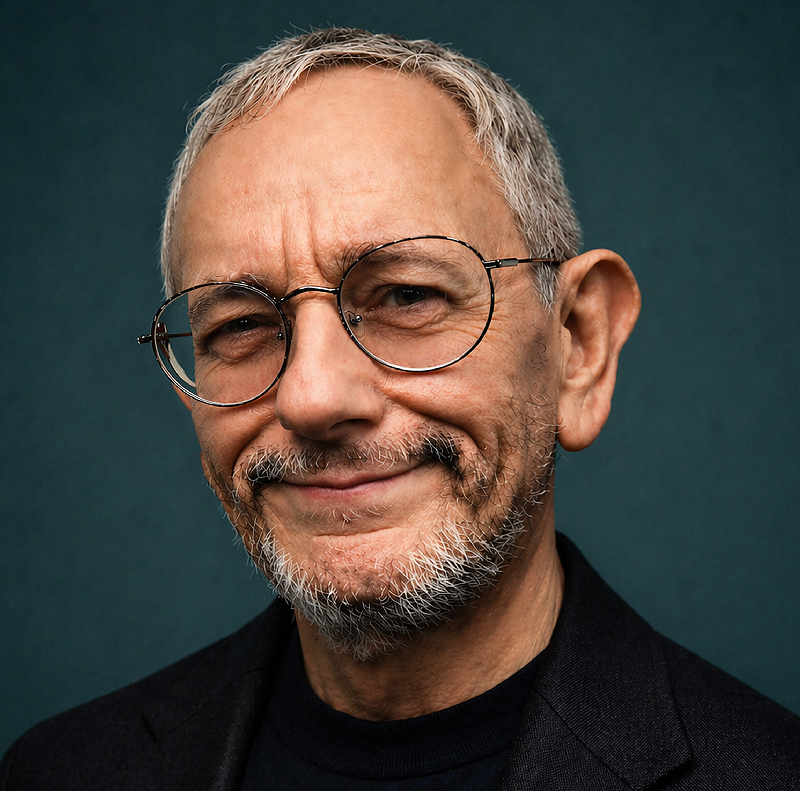
Meet your hosts:
Episode 143
Tom Yevsikov Interview
Episode 132
Wayne Crowe Interview
Episode 174
Simon Hartley
Episode 135
Devon Brown Interview
Episode 154
Anik Singal Interview
Episode 155