

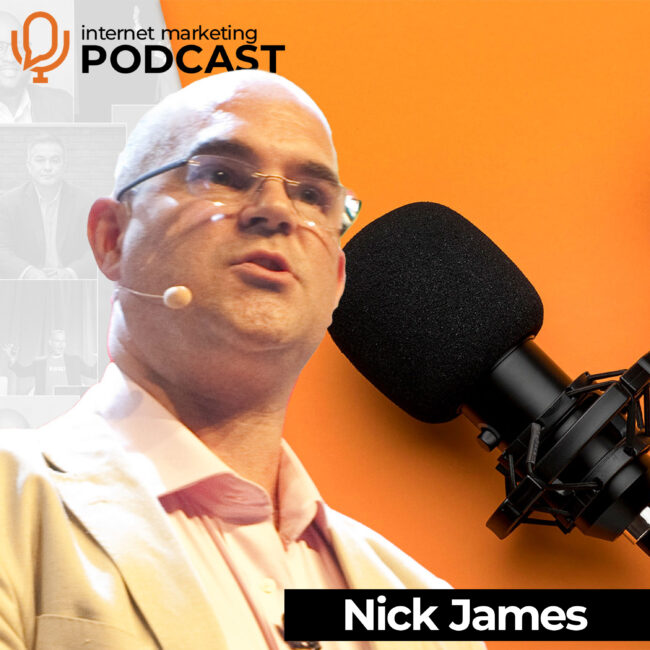
About this Podcast:
Today’s guest is Nick James, a true internet business veteran who’s quietly built and sustained a successful online company through every major shift in the digital world. Nick launched his first online business back in 2000, just after the dot-com bubble burst. And now, more than 25 years later, his company is still going strong. He’s the founder of eShowcase, a platform trusted by marketers who value long-term thinking, smart systems, and sustainable growth. Now, Nick’s story is all about longevity, experience, and perspective, and that’s exactly why I think today’s conversation will be so valuable.
Episode Transcript:
Editor:
Today's guest is Nick James, a true internet business veteran who's quietly built and sustained a successful online company through every major shift in the digital world. Nick launched his first online business back in 2000, just after the dot-com bubble burst. And now, more than 25 years later, his company is still going strong. He's the founder of eShowcase, a platform trusted by marketers who value long-term thinking, smart systems, and sustainable growth. Now, Nick's story is all about longevity, experience, and perspective, and that's exactly why I think today's conversation will be so valuable.Editor:
Nick, welcome.Nick James:
Hey, thank you very much indeed for having me. It's great to be here and to share maybe some stories about how things were when I got started, how they are now, and how everyone can benefit from all these latest AI changes that have come. They've exploded onto the scene in the last couple years.Editor:
Sounds good to me. Well, why don't we do that? Why don't we start right at the beginning? Your online business journey started in 2000. What did the landscape look like back then?Nick James:
When I actually think back to when I got started, I remember going to some conferences. And one of the conferences I went to in London, in Wembley, featured a guy from Canada called Corey Rudl. And he was making a presentation about how to make money with email. And I just remember thinking back in the day, "Oh my goodness, wouldn't it be great if I could do that, if I could build up some email lists, an email database, send out some emails, make some money with it?" And I licenced his presentation because I was so inspired by that, although I had absolutely no experience in how to do this at all.Nick James:
And it was from that very beginning that I started to sell information products online. But my first information product was selling Corey Rudl explaining how to make money with email. And then I thought to myself, "Well, I better get a website. I better get an email account. I better get an auto-responder system to send out all these emails and learn about all this stuff." And yeah, that was 2000, 2001. And we've come a long way since then. However, what has remained constant is I still make an absolute fortune sending emails. So, Corey was so ahead of his time back then. But yeah, things have changed.Editor:
It's weird to think that technology has shifted so much in that time. And maybe it's easy now to forget that setting up a website back in 2000 wasn't as easy as it is today. So, what motivated you to take that step in the first place, Nick? What made you jump in with both feet?Nick James:
Well, I suppose when you get onto somebody's list, when you start to discover that there is a new way of making money that doesn't involve exchanging time for money, and you start to look at all of these other offers that people are sending to you, I think the biggest thing that started to make sense was, here was a way of breaking free from a traditional grind of getting up and doing various jobs, going and working for various people. And all of a sudden, I realised that I could sell information products, I could market online. I didn't have to exchange time for money. And it was a complete revelation for me. But there was a tonne of things that I didn't know how to do.Nick James:
And just thinking back that... I remember my dad, in his career, he didn't go into a career that he wanted. He went into a career that his parents chose for him. So even going back a generation, it must've been even tougher. Now, I at least had the freedom of choice. But when my eyes were open to this whole thing of, "Hold on a second. I'm not restricted to a salary income," right? And whether your salary income is 30,000, 40,000, 50,000, 100,000 a year, when you start selling widgets on the internet that... Let's face it now, they don't need to be shipped physically. You don't need to give them to the mailman and have them shipped by courier, like I did when I got started with these videotapes and cassette tapes I was selling. There is no limit to the income that you can have. So, for me, that was a huge eye-opener.Nick James:
And then I started listening to more and more people that, I thought, were forward thinkers, whether it was a forward-thinking marketer or a self-improvement guy like Brian Tracy. And let's face it, he was still selling information products about how to think better and improve yourself. I would just realise that I was living my entire life under a glass ceiling, and it was time to take that glass ceiling away. And then I just started to learn more. I started that if I put a project together and people bought it and I made money, I should do it again and again and again, and I just got better at that process. So, I'm not sure whether that particularly answers the original question you asked, but I just couldn't stop once I realised the unlimitless potential that was in front.Editor:
Well, I think the fact that you've been doing this now for over 25 years, obviously, you're doing something, right? But what do you think has been the key to the longevity that you've experienced?Nick James:
I think it's been listening to people and it's been having your money goggles on. It's about looking at these trends that have been changing. I mean, I remember, I suppose... Let's look at what's changed.Nick James:
When I first got started, I knew that if I wanted to get my offer in front of people, I needed to go and look for where those customers had spent money with other people, and I would go and rent their mailing list or their customer list. And I would always look for these lists of people that would say, "Who have you got that has bought something similar to something that I've got for sale?" And I would write to those people and get them to come visit my website. And that was all very well back in the day when you had low-cost stamps, low-cost ways of printing. And there wasn't GDPR in place anymore. There weren't the privacy policies that are in place now where you could just go and rent those lists. That was great. But as time moves on, you then have to work out how else you want to market yourself online. And that means that you have to embrace new technologies that come through.Nick James:
So, if we take things bang up to date now, the issue that I think most people are still facing is they're still trying to use old techniques in a modern AI-driven world, which is one of the reasons that we've put the eShowcase software together, in order to help people to market themselves online better by using the technology that's around now. So, back in the day, you have to go to somebody's database of customers and say, "Can we rent that list?" Now you can just look at what Meta is doing. They've got 3.48 billion people on the Meta platform every single day. So, the question is now, instead of going off to another company and saying, "Can I rent your customers' names and addresses or what have you and send them a letter?" what we do now is we put ourselves on the Meta platforms, on Facebook, on Instagram, and we put out a message there. It's a little classified ad. So, that's changed. It's a completely different way of farming and finding customers.Nick James:
But here's the other thing that I think that's helped us. And that is, I think gone are the days where you could solve all of your problems by putting an opt-in box on your website and saying, "Hey, would you like to join my free newsletter?" or, "Would you like to download this PDF or lead magnet," or whatever you wanted to give away for free, a video or a piece of software, whatever it happens to be.Nick James:
The days of that are gone. Now, I'm not saying they're gone as if they don't work anymore. Sure, they do work. But the answer to surviving in today's marketplace and having this longevity is understanding that trends have changed. And it's harder to get people to visit your website than it ever used to be. I mean, even Google for the last two or three years, or however long it is, now puts those AI suggestions at the top of the first page of Google. So people don't want to leave Google. Google love that. They keep people on the Google platform. So, that's a trend that's changed.Nick James:
So, let's face it. It's harder than ever to get traffic to your website, especially if you're not using offline marketing to drive them there. So, how do you then build your list? How do you get people to know about your products if you're not going to get people to your website to learn about you and to opt in? That's the magic that you have to work out how to readjust to make sure that in this modern AI time, that you're not wasting your efforts on these old marketing techniques that worked in 2015, 2018, 2020. They've gone.Nick James:
So, you have to have your money goggles on. You have to look at these trends and realise that, yes, the principle is the same, that you have to get somebody to join a list, raise their hand, show some interest in what you have for sale. But the tactic that used to work maybe isn't as effective as it was. Maybe people are desensitised to it, the world's moved on. So, I think it's about that overall thinking about, "Okay, how do we do it today if what was working yesterday doesn't work so much?" And I think that's the key thing to have in place.Editor:
I can imagine people racing online now to see where they can buy these money goggles that you talk about. But you did mention eShowcase, which is a platform that you yourself have put together to run your business. Is that correct?Nick James:
So, what we were realising was, we were sticking our marketing together, our tech stack looked like some Frankenstein monster of different pieces of software. So, we had some great brand names that we were using for various different things, such as Calendly was the best appointment booking software that was out there. There was GoTo Webinar for hosting webinars. There were funnel building solutions and systems. There were campaign automation systems.Nick James:
And what we've done is we've put it all under one roof. So a shopping cart and an affiliate programme so you can have affiliates promoting your products for you. A CRM system so you can keep a note of who your customers are, what they've purchased, what they haven't purchased, when they joined your list, what they've showed an interest in. We've put it all under one roof so that instead of having this duct tape method of sticking together all of the best from all of these different companies, which, by the way, would end up costing us 3, 4, 5, $600 per month to run, we've now got it all under one roof.Nick James:
And then the idea is to then make that solution available to our customers, to others that want to run an online business. Heck, we were even talking to a stables recently, we were talking to bricks-and-mortar companies, even talking to a dentist that specialises in horse dentistry, about how they can use this software. And now, I mean, just so much because you can then bolt that into this AI explosion that's just been going on for the last couple of years.Nick James:
So, yeah, it's a platform, it's eShowcase.com, where it simplifies everything by having it all under one roof. So, it's worth checking out. And like I say, it's been running our business for at least 18 months. And we continue to make sure that that's updated and developed over time.Editor:
Sounds amazing. I mean, this all ties in really neatly to something that I know you are a great proponent of, which is the lines of convergence as well, how the tech has shifted and how opportunities now have changed. Just for anybody who hasn't come across Nick James before, maybe you could just talk about the lines of convergence, what that means, and also how that then applies to the solution that you've put together with eShowcase.Nick James:
And I think now this is more than important forever. Now, I first heard this concept from a guy called Bill Myers on a videotape that I purchased back in the mid-1990s. So I want to give credit to him for first opening my eyes to this. But he was talking about, if you're going to be running a mail order business, if you're going to be running any kind of business, what has come into place to make now the best possible time for you to run this business. And he's absolutely right, but we've now got extra lines of convergence that come into place. And what I mean by this is, firstly, we're not living in a suppressed country where... In the Western world, everyone has the freedom to start a business. You don't have to go down on bended knee to the emperor or whoever to ask permission to start a business. So, we're living in a free enterprise world that everyone can start a business.Nick James:
We also have high-speed laptops and computing. We have the World Wide Web. We have 24-hour couriers. We've got solutions and software out there now that makes our job easier. We've got real-time credit card processing. That even wasn't there when I started back in the early 2000s. I remember in about 2001, 2002, having people order online, but I had to print out a sheet of paper with their details on it, with their name and their address, their 16-digit card number. It wasn't encrypted or anything. It was just printed out from a webpage. And then I would have to type their details into this database. I'd have to type in the 16 digits into a tabletop machine. It was a laborious process. And I had what's called capability risk back then that I probably couldn't process more than 2 or 300 orders per day and get them out ready for the courier to collect from goods out, which was my garage at the time, fast enough.Nick James:
So, even this very fact that we have Stripe, which has simplified the credit card processing ability for everyone. You don't have to go to your bank manager or go down on bended knee to process Visa or MasterCard, American Express these days. Everyone can get accepted. All right, there are a few money laundering checks to go through, but everyone has Stripe. That's another line of convergence.Nick James:
AI is a line of convergence. And everything has happened much faster over time. In fact, if we think back, I mean, I'm not sure who first discovered fire. So for the purpose of this interview, let's just say it was a million years ago. Okay? And I don't know when the wheel was invented, but let's just say that was, I don't know, 5,500 years ago. And then over time, we've had more and more discoveries and inventions. And what's really apparent to me is how closer together... after we had the fire and the wheel. Then we had things like the printing press. That was, like, 550 years ago. The steam engine, 325 years ago. Then we had the telephone with Alexander Graham Bell, 150 years ago. Marconi with radio, 135 years ago.Nick James:
Moving forward, TV and penicillin, they were huge discoveries or inventions of this time. That was 100 years ago. The internet... Or then the computer with Turing, 80 years ago. And then we had the first TCP/IP internet connection. It wasn't the World Wide Web back then. That was 55-60 years ago. Moving up to Tim Berners-Lee, 1989 to 1991 when he made the World Wide Web public. And the difference between those two is the fact that then you had hyperlinks and you could have webpages.Nick James:
And then you think about AI in the last couple of years. The timeline, each massive discovery or invention was getting smaller and smaller and smaller until the point where actually today we have everything that we need for anybody to be able to walk into a PC store right now, buy a laptop and be in business that day. And I'm thinking never in the world before has it ever been so easy, so cost-effective for everyone to start themselves up in business.Nick James:
And you mentioned earlier on about 20 years ago, to set up a website, you had to buy a domain name, you had to work out where to get one of those. Then you had to learn about something called FTP, which was getting your web design files from your computer up to the internet. Then you had to code and you had to learn about HTML and all these kind of things. Well, that's all gone. But that's why we have page builders. We have software like eShowcase to build software for you. So, it is just like, type with two fingers, click a mouse button, and you could be on the internet.Nick James:
So, these lines of convergence really have levelled the playing field for everybody to have a business. And what I want you to imagine for a second is, your website, the amount of space that your website or your business takes up on the internet, can take the same screen size or the same shopwindow size as some of the biggest corporations in the world. Your website is going to take up the same amount of space on somebody's screen as Facebook or as Google or as Apple. You've got the same-size shopwindow as anybody else. And that, to me, is just the most amazing opportunity for somebody who just has their eyes open to think, "I could do this. And I'm in business straight away."Nick James:
Now, I'm not saying it should be free to start a business. Now, certainly, there are cheap ways to do that. And if you're running a business online, you should take it and treat it like a business. But the barriers to entry are so low, it just makes me wonder why everybody doesn't have some kind of side hustle as a way of earning extra money online. And that's what this line of convergence has done. So, I hope everyone can actually think that, yeah, there's still going to be things you need to learn how to do. However, how to take money has been solved, how to get your message out there has been solved. You just need to find out what your message is and tell it to the world.Editor:
I think it's fair to say that you really do believe that this really is the best time to start or to scale an online business, and it's perhaps a little bit easier than most people might realise.Nick James:
It is. It is much easier. But, I mean, we held an event recently and somebody said to me, said, "Why? It doesn't seem that now is a good time to sell products online, because AI can write that information for you." And I thought, I suppose it takes some crooked thinking to break why this is such an amazing opportunity, but I think we should address that crooked thinking. Yes, there is AI out there. And yes, I suppose AI can create information for you. You can ask it a question, it can answer it. And believe me, if that's all you're doing with ChatGPT, is treating it like Google right now, you're missing out on this whole AI explosion. And you can ask a piece of software, whether it's ChatGPT or Claude AI, to write something for you. But that information is only as good as the prompt or the question or the instructions you give it to make whatever it is you're asking it to make.Nick James:
So, if you ask it a bad question, it's going to give you a bad answer. So, as an individual, you still need to be a subject matter expert. You still need to ask it the right questions. You still need to be clever enough to know when it's given you a bad answer. But that doesn't mean you shouldn't use that technology. So, for some people that say, "Is there a future in information products?" absolutely there is. Everyone still wants to learn. But using AI is just like a tool.Nick James:
I remember 20 years ago when people used to say... There was this internet marketing thing or there was this digital marketing thing. Well, today, 20 years on, that's just called marketing. Everyone is using a computer, everyone is using the internet to market themselves. And I think in the future when they say, "Well, was that generated by AI?" It's just like, "Well, in the future, everything will be generated by AI because that's just the way the world has moved on."Nick James:
So, I don't necessarily think that the opportunity is gone because AI exists. I think that's a limited way that some people think. And I think now is a fantastic time for anybody to start a business because AI is around.Editor:
One of the things that you just touched on as well is that whole adage of garbage in, garbage out. And that, I think, will stay the same for all of time. It's how you prompt AI to give you the answer that you're looking for is going to be so important.Editor:
In terms of the business opportunities that you see, Nick, moving forward, from your vantage point, what's the biggest opportunity right now as we head into 2026?Nick James:
Well, before I answer that, let me go back to that point you were making about garbage in, garbage out, because something else came up recently at a training session. And I was demonstrating how I personally use my favourite AI chatbot to help me in business. And somebody from the class, they called out and they said, "Nick, can I ask you, is it important that you're being polite to the chatbot?" And he was right. When I was actually writing, I was... And I like using Claude by the company called Anthropic. It's claude.ai, if anyone's not come across that yet, but it's a very popular chatbot. And I was saying, "Hey, Claude, please, can you help me with this today? This is what I'd like for you to help me with. I've got this and there's that, and I want you to take this into consideration. And if you've got any questions, please ask." So, I'm shrinking down the prompt I gave it for the purpose of this interview, but the point was still the same from this customer, "Why are you being polite?"Nick James:
And I had to stop and think about it for a while. It was one of these off-the-cuff questions. And I had to say, "Well, I'm talking to the AI chatbot like it was a freelancer or an employee sat next to me in the office. I'm not talking to this computer programme any different than I would talk to my graphic designer or anybody else that works for us." And I started to think about this in the days that followed that particular training. And I think the question was kind of dismissed. But at the time, I was thinking, "Well, if I'm polite to it, it's going to be polite to me."Nick James:
So, I actually quizzed Claude on this very topic. Does it make a difference? Because, obviously, I believe this is the way to talk. And the conversation I had with it was quite insightful. So, it was saying, "Well, firstly, I don't take offence if you're rude." I mean, well, I didn't think he did, but that was quite interesting. But it said, "I will respond like for like. So if you're curt and abrupt and rude with me, I'll be curt and abrupt and..." not rude, but "with you. But also, it teaches me how you want me to create for you."Nick James:
And something that I've noticed, the more I've used Claude and the more I've asked it to perform some copywriting functions, such as helping me to quickly create emails or quickly create entire sales letters in some cases, the more I talk to it in that way, it seems to give me a much better response. And as this conversation went through, it actually said, "Actually, talking to me like a freelancer is one of the smartest things you could do because it actually takes away any anxiousness of how to prompt an AI engine when you actually just treat it like a human being, but also you're going to give it more detailed information." And I think it opened the eyes up to everyone that was in the class.Nick James:
The only time I've seen somebody get things wrong, I asked the question back in a support ticket to a particular customer, said, "What question did you ask in order to get this result?" And he said, "Well, I put in a detailed prompt. And it was, like, two sentences." And I think my response back to the support ticket was, "When I'm prompting, I'm probably writing anywhere between 300, 500, 800 words and putting in that effort at the beginning in order to get back what it is that I wanted to do."Nick James:
And the reason I'm labouring this point was, the first time I tried to ask AI to write me a sales letter, it was terrible, or a script for a sales video. It was awful. However, more recently, I've now, from start to finish, created entire sales presentations entirely with Claude, based on treating it like a freelancer and showing examples of what I wanted it to create.Nick James:
And so, I don't think anyone should be worried about prompt engineering or buying a list of a thousand prompts that you may or may not want in the future. You just got to get better at asking questions of these things. So, I hope that kind of dives a little bit deeper into the whole garbage-in, garbage-out kind of idea of how to get the best out of chat.Editor:
It absolutely does. And I think as well, one of the key takeaways there, Nick, is the fact that you see AI as a tool, almost as a member of staff, for want of a better phrase, and that's how you're treating it. You're not scared of it. Where I think a lot of people look at AI and think, "Oh, this dystopian future. And I have to be kind to AI because in the future, when computers run the world, it could come and tell me off for being rude to it in the past." So, I love the fact that you've taken us through that and that journey that you've been on to explain that actually, if you use it in a thoughtful way, I think that's probably the phrase I would use, in a thoughtful way, that you will get better results from the AI because of the way that you're interacting with it. And of course, as you say, you're training it. You are giving it the information that you want out of it. So, am I right in thinking that?Nick James:
You are. And you made me chuckle because you're talking about when the machines take over, reminds me of that opening scene in Terminator. And I don't know whether it was 2025 in Terminator or around about then when the machines took over. And yeah. So, a lot of people have got this kind of conspiracy theory that it's all going to go completely wrong and they're worried about it being a Terminator. So, it's tongue in cheek. I don't think it's going to go that way, but it's scary how clever computers can be.Nick James:
But what I would say to you is, I remember also the first time I made friends with a video camera. Because I think to a lot of people, when they stand in front of a video camera for the first time, all of a sudden, they become like a deer in the headlights, everything's go kind of crazy. And that can happen to everyone all the time, I suppose, from time to time. But when you make friends with a camera, you don't have that worry about the Autocue or you don't have that worry about being in front of the camera. It's just a very natural thing for you to be doing.Nick James:
The only other thing I can liken it to, I suppose, is when you learn to drive a car. The first time you sit in the driving seat, you put your seatbelt on and you buckle up and you start the engine, especially if you're learning in one of these manual stick shifts, you get the graunching of selecting the gears and the car stalls and it jerks around and you kind of feel a bit of a fool. But there comes a point in which... hopefully before you've taken your driving test, but there comes a point at which you actually drive from A to B without even thinking about what your feet are doing, what your hands are doing. Maybe you've even been dreaming whilst you've been driving down the highway about 101 different things. But it becomes a natural environment for you to be in.Nick James:
So, we need to take that to the same place with using AI. So, whether you're using AI or you're using another computer programme or you're in front of a camera, it just needs to be a natural environment for you. The more you use these tools, the more you'll get used to them and the more you'll just see them as a natural extension of the way that you think.Editor:
And that leads me back to my question about the biggest opportunities now as we head into 2026. What are the biggest opportunities on your list? And also, maybe what do you think other people should be looking out for?Nick James:
I want to give everyone four key things they can be doing in their business, the four key things that we teach everyone who uses eShowcase that they should be focusing on. And that is ways in which you can get more leads into your business, ways in which you can get more conversions in your business, ways in which you can add extra profits in your business for the average cart value, and then also how you can increase the customer lifetime value. Just think about those four things, and you're not going to go far wrong. And they're four things that eShowcase can help you with.Nick James:
So, by not forcing people to have to visit your website in order to join your list and focusing on, "How do we get more people into eShowcase," or into your database, which we have on our eShowcase platform, "What can we do in order to build our list?" So, the software that we now have gives us the ability to build our list by just asking somebody to comment under a Facebook post. And just by asking somebody to comment, you can then send them a direct message, whether it's Meta, Instagram or Facebook, works both the same. So, how can you get involved more on social media, get more people to interact, which is what Meta want you to do, to build your list? How can you get people to message you through the direct messaging platforms? When you do, you can get the eShowcase software to add somebody to your list.Nick James:
And then there's other things you could do. You could get people to ring and have an AI agent answer the phone and ask them for their name and their email address, or you could ask people to send you a text message, or use WhatsApp. How can you get more people to do that in order to build your list? So, there's various different ways that you can effectively double your lead generation in your business, really, really simply and easily with today's lead generation built into eShowcase.Nick James:
Then we look at the conversions. What can we do to increase conversion rates? So, again, through those traditional follow-ups, we can encourage people to make a purchase. But now we can reach out to them because we can not only email somebody that provides an email address, if they've also sent a text message, we can reach out to them by text. If they've messaged us on Facebook, we can reach out to them, we can retarget them. We can help get people to come back and make a purchase, and we can build up the know, like, and trust in order for somebody to feel confident in making a purchase, all thanks to eShowcase.Nick James:
And then we can also then start looking at ways in which we can increase the order value. How can we put in the order form bumps? How can we put in the upsell products? How can we make sure that nobody has to enter their credit card details more than once when they're buying from us? And then there's the customer lifetime value and getting people into recurring income. How can we increase the customer lifetime value?Nick James:
So, we've put a name to these four things and we're calling it QuadroNetics. So, how can you just start specialising in getting each of those four things to be optimised in your business? That's the biggest thing that I think is going to change over the next couple of years. Really dialling in those four things, but also being able to analyse and optimise using AI.Nick James:
And then the final thing with everything to do with getting your message out there, of course, is, once you've got some great content, remember that the great content that you put out online has a certain lifetime. What is it a story has the lifetime of? Was it 24 hours for a Meta story? Then it's gone. Well, put the story back up. Recycle that story. What about the Facebook post? How long is it going to be there before it goes down in somebody's timeline? Well, use the software to then post to Facebook or post to Instagram, but then repost 28 days later or 56 days later. So you're on a four-week or an eight-week cycle. So, it starts to seem that all of this great content is just automatically being re-added to an audience that's never seen it before.Nick James:
So, they're the four things that I recommend people do to really dial in their business this year.Editor:
No, they are four absolute pieces of gold there. I mean, Nick, one of the things about the eShowcase platform... First of all, it's a really robust platform. Secondly, I think for anybody who's got an existing business, they, just by listening to this or reading this, will know that, "Yeah, I can see the benefits here." But for anybody who perhaps is a little bit unsure, maybe feeling a bit overwhelmed, what's the first step they should take?Nick James:
Go to facebook.com, search for eShowcase. And there's a post pinned to the top of the eShowcase page. Just write the word automate. And not only will you see how the system works because it'll happen to you when you write the word automate into the comment section, but also you'll download a free PDF guide that explains exactly all the benefits that eShowcase can provide to you. So, that's a great thing to do. Just go to Facebook, type in eShowcase. You'll know it's a nice green and blue logo. Just click on it. I think there's only three results there anyway right now. But go and do that, type the word automate into that first comment box. And that's the best way to get started with that.Nick James:
I think the other thing that I would mention about making the best out of where we're at now is, obviously, there's a lot of new ground. There's a discovery that everyone has to go through. And one of the top tips I give anyone is to, well, I want to maybe suggest two, but one of them is patience and resourcefulness. I think it's not spoken about enough. And what I mean by this is, when we're all trying something new, we all have a knot in our stomach that turns up if we can't figure something out. Maybe it happens just with technical stuff online, maybe it happens with other things, maybe you're trying to fix the car, or 101 different things to do with DIY. You get this knot in your stomach when you can't work something out. What I'm saying is, on the other side of that knot, when you actually work out how to do something, you have a sense of achievement.Nick James:
But just because you can't work something out, Google's your friend. Join a community, look for help on YouTube, be resourceful in helping you to overcome that, because that's where the magic happens. When you actually push through these challenges and you get to the other side, sure, you're always going to face another challenge, but you get this kind of action and reward infinity loop that takes place. So you want to take action when you're inspired to take action. And by taking action, you get a result and you should be inspired to take more action. So, push, to push through.Nick James:
And the second thing, when you are being resourceful and maybe you're asking questions, maybe you're in a Facebook community, maybe you're in a private discussion group somewhere or a WhatsApp group or something, the next thing that I would recommend everyone does is they qualify who's giving them advice. And the reason that I've not really liked Facebook communities... I love Meta because it's got 3.48 billion users. I don't like it because it kind of gives everyone a voice, even the people that aren't qualified to answer and give assistance. So, be careful of who the loudest voice is and whether they're sharing the right information for you. I actually struggle to find time to get into communities and actually provide my experience through those kind of communities. And sometimes I feel the people that aren't busy being successful are just hanging out online. So, this is what I'm saying, be careful of listening to the loudest voice.Nick James:
I'll give you an example of this. I've stopped counting how much money we make in our business on a weekly, monthly, yearly basis. I start counting the money that our students make. And that's the metric that I love. And we've got a student called Shane who recently had a promotion. I asked him before the promotion, following the advice we'd previously given him, where he was at. And he said he was about 38k, $38,000. He launched a product. He's now well over $50,000. And every day during his little promotion, I was championing him, another couple thousand dollars came in, another couple thousand dollars came in. I think he did over $12,000 with his little five-day promotion. Really, really excited for Shane. And somebody was saying, "Look, people don't read anymore. We live in this TikTok environment where people just want to be spoonfed short chunks of information." I'm like, "Okay, I understand that." And what this loudest voice in the room was saying was, "Don't put your call-to-action button at the bottom of your sales page. Your call to action should be all over." So, this was the question.Nick James:
So, Shane came to me after his launch had started, and he was saying, "The front end's going really well. The order form bump's really working well. But you know what? The first upsell is killing. It's on its backside. It's not working. Please look at it." So, what's the first thing I did? Well, I said, "Shane, I'll help you." The first thing I did was I took the URL of his upsell page, I put it into Claude, and I said, "Claude, tell me what the weakness is of this upsell page." So, again, I'm not showing this as a sign of weakness. I'm showing this as a sign of positive thinking that, "Hey, I could struggle to work out what all the weaknesses were on this page for half an hour, two hours, or whatever it was, or I could just ask Claude to give me the shortcut and then use my subject matter expert skills to actually know when Claude's come up with a good point or not."Nick James:
And one of the points that Claude came up with was the fact that you're giving people the option of saying yes or no before you can actually sell the benefits of the product on the sales page. So, here was this loudest voice in the room saying, "Put your call to action right at the top." And here was a statistic where that just wasn't converting. So, what I said to Shane was, "Get rid of your Order button at the top underneath your video message and just have it after you've explained the benefits of why having that product should work." That took his upsell from converting at something crazy, like just 3 or 4%, which is terrible for an upsell, for those of you that aren't aware, putting it to the bottom, all of a sudden his upsell rate jumped to 10%. Few more tweaks, it's up at 15% by the end of his launch.Nick James:
So, if you just listen to the loudest person in the room who's just spouting from opinion and no experience for actually testing something scientifically, you could be thrown wildly off, which is why it pays to seek out the assistance of somebody that's not just accomplished what it is you want to do, but actually walks that path, and can actually remember what it's like to walk that path, and is prepared to help you. So, again, be careful of listening to the loudest person in the room.Editor:
Nice. And I think that really neatly explains why you've been in business for as long as you have, because of the insight that you're able to give, but also how to utilise Claude, the AI, to give you the answer without you, as you say, spending hours on this, trying to figure it out for yourself, using those tools that are now at your disposal to be able to come up with a solution much quicker than you would've been able to do otherwise. And you must have, because you've been doing this for such a long time, as we mentioned, over 25 years, you must have millions, maybe not that many, but certainly hundreds of success stories. And that must make you proud.Nick James:
It does. We released a book recently, Secrets of Six Figure Earners, where I think we've got a dozen customers that we've helped in various shapes and forms. And we wanted to say, "Okay, so we understand that you have a great product and you're successful, but let's get inside your head. How did you do that? What was your secret?" Maybe it was, as I say, the patience and the resourcefulness, or maybe it was the not listening to the loudest voice. And we got them to tell their story.Editor:
Nick, for anybody who wants to find out more about you and your background and your businesses, where do we need to go to do that?Nick James:
Well, sure. Anyone could just go and head over to nick-james.com. That's where I have my authority site. That's where we've put up lots of thinking, lots of articles, lots of videos, lots of free resources. Certainly, go and head over there. You'll notice one of the big things that's on that page is you can go and request a free book. We'll ship it to you no matter where you live in the world. Just cover a little bit of the postage in order to get it there. We'll ship that out to you. It's a bestselling book. It's been number one on Amazon, as all our books have. But you can go and grab one right now for free. So you don't even need to go and buy it on Amazon if you go to nick-james.com.Editor:
And that book is the story of how you've got to be where you are. Is that right?Nick James:
Yeah. It tells the story from a chance meeting that I had with somebody who I met in a car park, who then eventually invited me to go to that seminar where I was awe-inspired about email marketing that kicked the whole thing off. So, it tells my story all the way through. It talks, again, about those four key things that we now call QuadroNetics, which essentially are how to get more leads, how to get more sales, how to get more profits, and how to get a higher customer lifetime value. It's all there as the four keys in the book. And it's a great introduction as a way through that anyone from standing start, even on a shoestring budget, could be up and running in business today in the shortest possible time ever.Editor:
Amazing. Definitely go and get that free book. Nick, it's been an absolute pleasure chatting with you today. Thanks so much for your time.Nick James:
Appreciate it. Good to be here.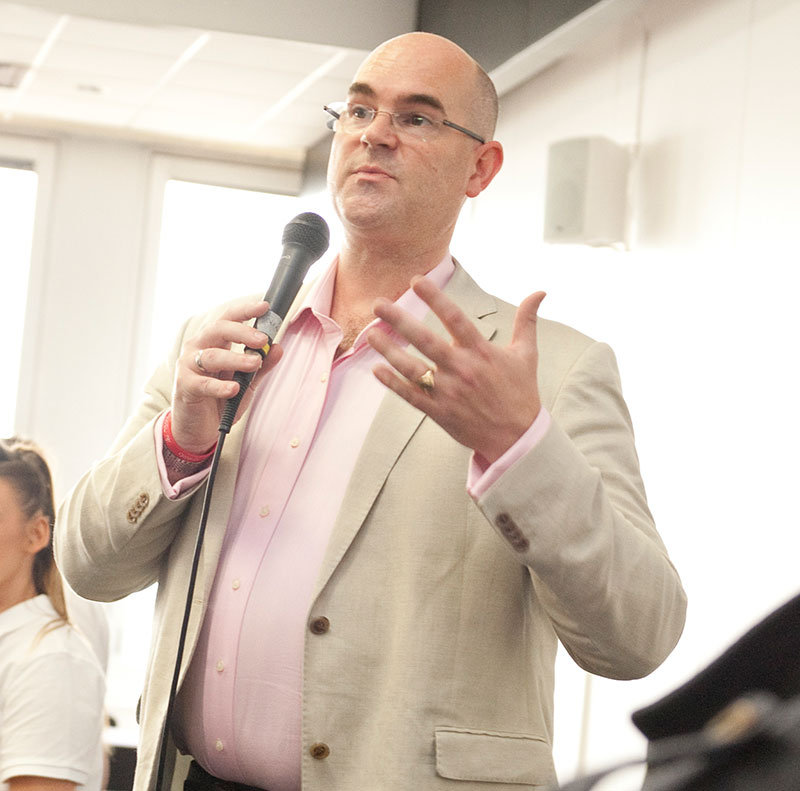
Meet your hosts:
Episode 168
Harris Fellman
Episode 147
Steve Dougherty Interview
Episode 150
Mo Latif Interview
Episode 128
Tracy Childers Interview
Episode 185